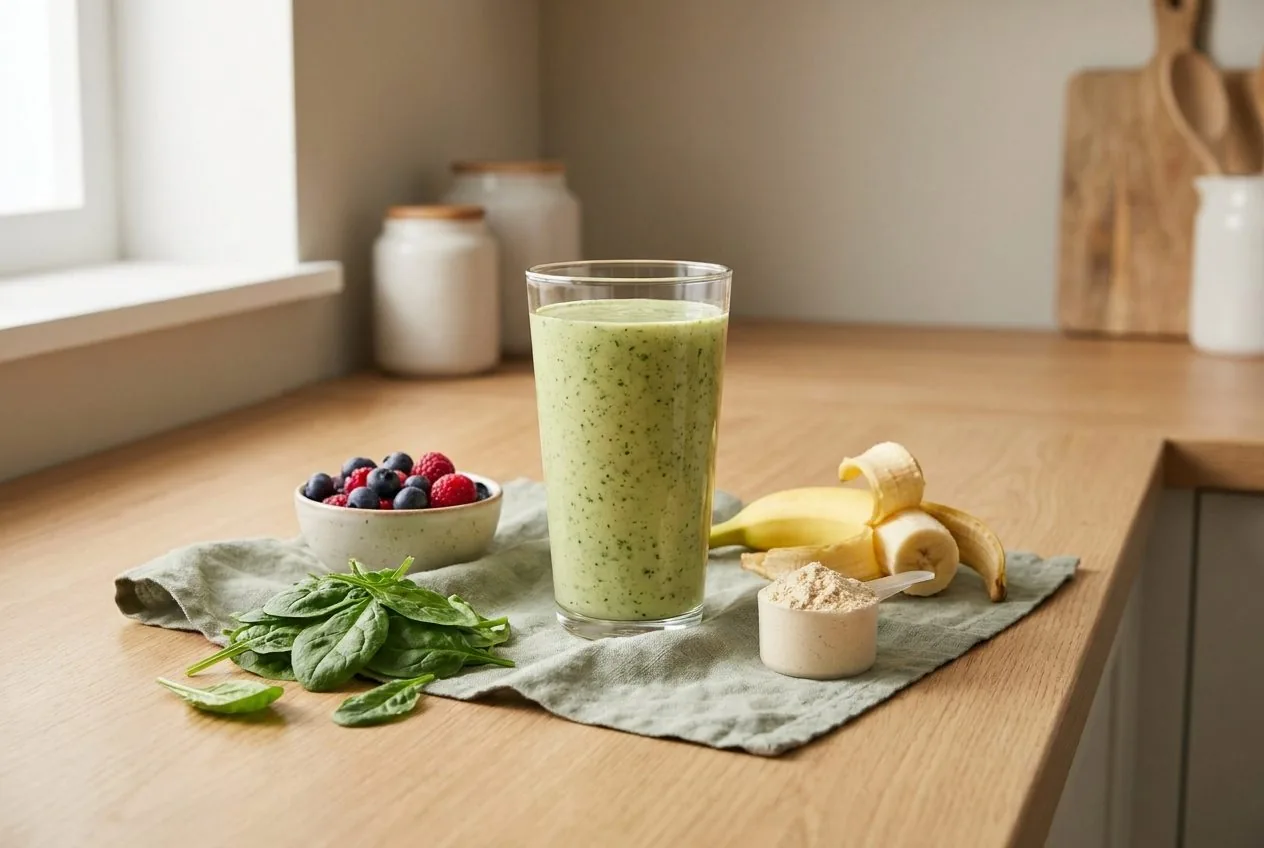
Plenty of women over 40 buy the Smoothie Diet, follow it for a week or two, and quietly feel like it is not quite built for them. They are not wrong. The 21-day program is a clear, fairly priced structure, but as written it runs light on the two things a midlife body needs most: enough protein, and a plan for what happens on day 22. The good news is that both gaps are easy to patch yourself, and nothing in the program forbids it.
Short answer: Keep the structure you paid for, but make five adjustments: add protein to every smoothie, build your one solid meal around protein too, add fiber and fat for fullness, ease the pace if you feel wiped out, and plan your exit week before you start. Do that and the plan works with a 40+ body instead of against it.
This article is for information only and is not medical advice. Talk to your healthcare provider before changing your diet, especially if you have a medical condition, take medication, or have any history of disordered eating.
First, what the plan actually is
Before adapting anything, it helps to know what you are working with. The Smoothie Diet is a digital program of 36 smoothie recipes and a 21-day schedule, sold once for $27 (listed down from $47) through ClickBank, which carries a real 60-day money-back guarantee (The Smoothie Diet). For 21 days you replace two meals a day with smoothies and keep one solid whole-food meal plus two snacks (The Smoothie Diet). Prices move with promotions, so check the current figure on the official site. Three weeks of daily blending also asks a little of your equipment; our guide to the best blenders for daily smoothies covers which machines hold up.
The mechanism is not magic. Swapping higher-calorie meals for lower-calorie smoothies puts most people in a modest calorie deficit, and that deficit is what does the work. Our full honest Smoothie Diet review breaks down the structure week by week and where it falls short. This guide is the sequel: given that structure, how do you make it genuinely serve you after 40?
Tweak 1: Put protein in every smoothie
This is the most important change, so it goes first. From roughly age 40 onward, research suggests adults lose muscle each year unless movement and protein push back, and the pace can pick up around menopause (Journal of Clinical Medicine). Eating fewer calories with too little protein invites your body to give up muscle along with fat, which is exactly what you do not want in midlife.
The fix takes seconds. Add a scoop of plain protein powder, half a cup of plain Greek yogurt, or a spoon of cottage cheese to each smoothie. That alone can turn a fruit-forward blend that barely registers 5 grams of protein into one carrying 20 or more. If you would rather design blends from scratch, our high-protein smoothies for women over 40 do the math for you, and the same principles bolt neatly onto the program’s recipes.
Tweak 2: Build the solid meal around protein too
The plan gives you one whole-food meal a day, and this is where many people waste their best opportunity. A salad with a sprinkle of chicken is not enough. Make the protein the centerpiece: eggs, fish, chicken, tofu, beans, or Greek yogurt, in a palm-sized portion of roughly 25 to 30 grams. Our step-by-step guide to hitting 30 grams of protein per meal after 40 turns this from a math problem into a short list of go-to plates.
Anchoring your one solid meal with real protein does two jobs at once. It protects muscle, and it keeps you fuller for longer, which softens the hunger that liquid meals can leave behind.
Tweak 3: Add fiber and fat so you stay full
Liquid calories tend to quiet hunger less than the same calories eaten as solid food (International Journal of Obesity), which is why week one of any smoothie plan can feel like the hungriest week of your life. You can blunt that. Blend in fiber and a little healthy fat: a tablespoon of ground flaxseed or chia, a small handful of nuts or a spoon of nut butter, or extra leafy greens.
Aiming for about 25 grams of fiber a day (21 grams after age 50) supports both fullness and digestion (American Journal of Lifestyle Medicine), and smoothies made with whole fruit and greens rather than juice help you get there. Our breakfast smoothies that keep you full till lunch were built around exactly this problem if you want ready-made combinations.
Tweak 4: Respect your energy and pace
The program assumes a fairly steep drop in calories, and for some midlife women that is more than their sleep, stress, and training can comfortably support. If you feel wrung out, dizzy, or unusually irritable, that is information, not weakness. Eat a slightly larger solid meal, add a second small snack, or keep more of the higher-protein smoothies in rotation.
A reset should leave you steadier, not depleted. If under-eating starts costing you sleep and energy, you are trading away the very things that make any plan sustainable. Slower and fed beats faster and miserable every time. Hydration plays a quiet part here too, especially in warm weather; our guide to electrolytes for menopause in summer heat covers when plain water needs a little help.
Tweak 5: Plan your day-22 exit before you start
Here is the honest bottom line on short programs: what you do after them decides whether anything sticks. The Smoothie Diet ends more or less where its calendar does, leaving the crucial question of “what now?” mostly to you.
So answer it in advance. Before day one, sketch your first normal week: a protein-forward breakfast habit to land on, two or three easy lunches, and a dinner rhythm you can actually keep. If you know you do better when someone else handles the planning, a structured meal plan can carry that momentum forward. The goal is simple: give yourself somewhere deliberate to land, so a structured beginning does not dead-end into old habits.
Common mistakes to sidestep
Skipping protein because “it’s a smoothie diet.” The program’s name is not a nutrition rule. Protein is the one thing you must not leave out after 40.
Chasing the scale daily. Early change on any short plan is partly water, and daily weigh-ins mostly measure stress. Judge the three weeks by energy, routine, and how your clothes feel.
Treating it as a forever plan. Three weeks of liquid meals is a reset, not a lifestyle. Use it to break decision fatigue and rebuild a protein habit, then move on.
Buying it expecting a miracle. The marketing oversells what an ordinary calorie deficit can do. Go in expecting a modest, honest nudge and a structured break, and you are far more likely to finish glad you did.
The realistic verdict for a 40+ body
Adapted this way, the Smoothie Diet becomes a reasonable tool: a low-cost, decision-free 21-day structure with the protein and exit plan it was missing bolted on. It will not transform your body, and no honest guide should pretend otherwise. What it can do is remove the daily “what do I eat?” for three weeks while you rebuild a few good habits.
If you want the full breakdown of price, guarantee, and structure before you decide, read our complete review, or see the 21-day smoothie plan that makes the food decisions for you for the short version of who it suits. And browse the rest of our Smoothies & Simple Meal Prep section for protein-first recipes you will keep long after the 21 days are over.
Frequently Asked Questions
- Do I need to change the Smoothie Diet recipes at all?
- Nothing in the program forbids adjusting the recipes, and after 40 a couple of small changes make a real difference. The recipes skew toward fruit and greens, which can leave protein lower than a midlife body wants while eating fewer calories. Adding a scoop of plain protein powder or a serving of Greek yogurt to your smoothies is the single most useful tweak, and it does not break the plan.
- How much protein should I aim for on the plan after 40?
- A useful target for many midlife women is roughly 1.0 to 1.5 grams of protein per kilogram of body weight per day, spread across meals. Practically, that means building each smoothie and your one solid meal around a real protein source rather than treating protein as an afterthought. This protects muscle while you eat less, which is exactly what you want. Talk to your provider or a dietitian for a target tailored to you.
- What should I eat after the 21 days end?
- This is the program's weakest point, so plan your exit before you start. Decide what your first normal week looks like: a protein-forward breakfast you enjoy, a couple of go-to lunches, and a realistic dinner rhythm. Without a maintenance plan, old patterns tend to return and any early change often follows. Treat the 21 days as a structured beginning, not a finish line.
- Is the Smoothie Diet safe if I take medication or have a health condition?
- For most healthy adults, three weeks of smoothie-heavy eating is unlikely to cause harm, but this is not a decision to make from an article. If you have diabetes, take any medication, or have any history of disordered eating, talk to a clinician before starting any meal-replacement plan, this one included. That is not fine print; it is the actual first step.
Sources & references
- The Smoothie Diet, official sales page (opens in new tab)
- The Smoothie Diet, official program guide (opens in new tab)
- Journal of Clinical Medicine, Menopausal transition and loss of muscle mass (2020) (opens in new tab)
- International Journal of Obesity, Liquid versus solid carbohydrate (2000) (opens in new tab)
- American Journal of Lifestyle Medicine, Closing America's Fiber Intake Gap (opens in new tab)
Before you go
The 7-Day Protein-First Meal Plan for Women Over 40
A complete protein-first week, finished for you: your personal protein target, a one-page shopping list, 21 recipes at 25-35 g protein each, and a timed 90-minute prep schedule. Printable PDF, paired with a free 7-lesson email course.
Free guide
The 7-Day Protein-First Meal Plan for Women Over 40
A complete protein-first week, finished for you: your personal protein target, a one-page shopping list, 21 recipes at 25-35 g protein each, and a timed 90-minute prep schedule. Printable PDF, paired with a free 7-lesson email course.