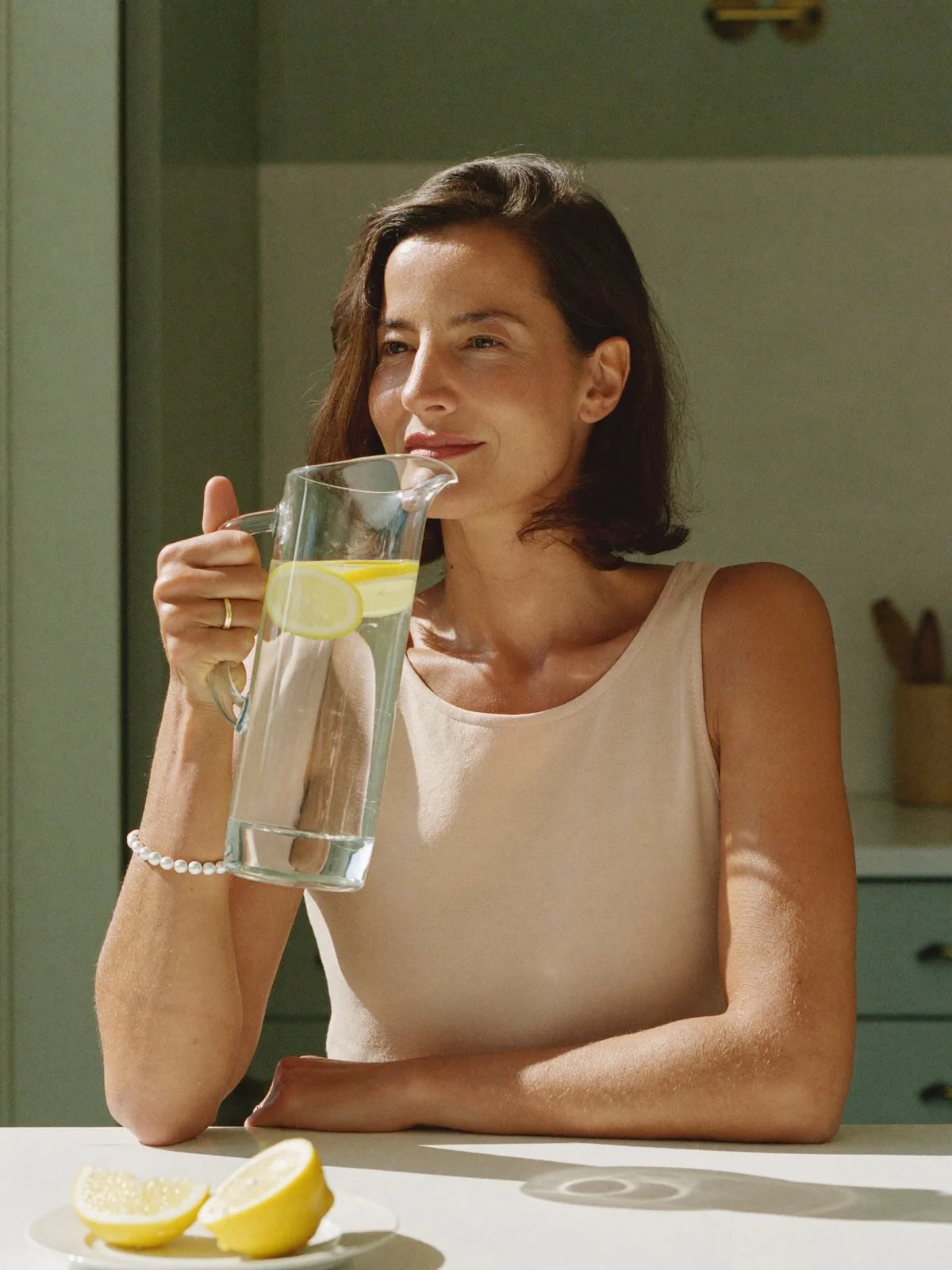
If summer afternoons leave you foggy, cranky, and reaching for snacks you do not really want, part of the answer may be simpler than you think: you are a little dehydrated, and in menopause and heat, plain water alone does not always cut it. The short version of this guide is that hydration in summer is water plus a sensible amount of electrolytes, mainly sodium, potassium, and magnesium, and there are several easy ways to get them. Below are the options that actually help, grouped by what you need, with honest notes on each.
None of this treats menopause or changes your body. What good hydration reliably does is remove an avoidable source of feeling worse, so that fatigue is not being quietly amplified by a fluid deficit. That alone is worth a few minutes of attention on a hot day.
This article is for information only and is not medical advice. Talk to your healthcare provider before changing your diet or using supplements, especially if you have high blood pressure, heart or kidney conditions, or take medication.
Why electrolytes matter more in menopause summers
Two things stack up in a hot midlife summer. Heat increases how much fluid and salt you lose through sweat (MedlinePlus), and menopause can add its own fluid loss through hot flashes and night sweats. When you fall behind on fluids, you can feel off: tired, headachy, and low (Journal of Nutrition). Drinks with enough sodium, like oral rehydration solutions, help your body hold onto more of the water than plain water does (American Journal of Clinical Nutrition). It is the same principle athletes have used for decades, applied to the very ordinary challenge of getting through a heat wave feeling human.
Keep expectations honest, though. This is about feeling steadier day to day, not about weight or hormones. For the bigger daily-habits picture, our guide to menopause belly and the daily habits that help covers the levers that actually move the needle.
1. Plain water, first and always
Before any product, the base is water, and it is easy to drift through summer mildly under-hydrated. A large glass on waking, one with each meal, and a bottle you actually carry will do more than any fancy powder layered on top of a dry day. If you find plain water boring, that is a real problem worth solving, and the next few options help.
2. A low-sugar electrolyte powder or tablet
When you are sweating a lot, an electrolyte powder or tablet is the most convenient way to replace what you lose. What to look for: a balance of sodium, potassium, and magnesium, and a low-sugar or unsweetened formula so you are not pouring sugar in to rehydrate. Some popular options are quite high in sodium, which suits heavy sweaters and long active days but is worth watching if you manage blood pressure. There is no single magic brand; the best one is balanced, low in sugar, and something you enjoy enough to use.
3. Coconut water, the natural option
Coconut water is a pleasant, food-based source of potassium and a little sodium, and many women prefer it to sweet sports drinks. It does carry natural sugars, so it is not free of calories, and it is high in potassium, which matters if you have kidney issues or take certain medications. As one tool among several, it is a lovely way to add electrolytes on a hot afternoon.
4. Mineral-rich whole foods
You can eat your electrolytes, too, and food-first is often the steadiest approach. Leafy greens, yogurt, beans, and avocado carry potassium and magnesium (MedlinePlus, MedlinePlus); a normal amount of salt on real food covers sodium. Building meals around these means your hydration is not riding on a single drink. This pairs naturally with hitting your protein, which we cover in how to hit 30g of protein per meal after 40.
5. The DIY citrus-and-salt drink
The viral version of this is the so-called cortisol cocktail, and stripped of the marketing it is simply a homemade electrolyte drink: a little juice, coconut water, and a pinch of salt. It is a fine, pleasant way to hydrate. Just do not buy the hormone claims attached to it, which we unpack honestly in the cortisol cocktail, an honest look. As hydration, it works; as a treatment, it does not.
6. Collagen-and-hydration blends
Some products pair electrolytes with collagen, riding the fact that skin collagen tends to decline with the drop in estrogen at menopause (Gynecological Endocrinology). The hydration part is straightforward and helpful. The collagen part is a supplement, and supplement benefits are modest and not guaranteed, so treat any skin or joint promises with healthy skepticism rather than as a sure thing. If you enjoy the format and it helps you drink more, that is a reasonable reason to use it, with expectations kept realistic.
7. Iced herbal teas and infused water
If you simply will not drink plain water, make water more appealing rather than fighting yourself. Cold herbal teas, water infused with cucumber, mint, berries, or citrus, and sparkling water all count toward your fluids. The best hydration strategy is the one you will actually keep, and a jug of something you enjoy in the fridge beats a resolution to drink more plain water that never survives a busy week.
8. A hydrating protein smoothie
A blended drink is a sneaky-good way to combine fluid, potassium-rich fruit, and protein in one glass, which is especially handy on hot mornings when your appetite is low. Frozen berries, banana, yogurt or milk, and a scoop of protein powder make a genuinely refreshing, satisfying option. Our high-protein smoothies for women over 40 has a full menu.
If you like the idea of building a summer routine around smoothies, a structured plan like The Smoothie Diet organizes it for you, though some of its recipes are low in protein (Healthline), and our honest Smoothie Diet review tells you what it can and cannot do before you spend a dollar. As with any plan, keep your expectations realistic, and if you have a medical condition, take medication, or have a history of disordered eating, check with a clinician first.
Group it by your need
- You sweat a lot or have active days: lean on a balanced, low-sugar electrolyte powder plus water.
- You hate plain water: infused water, iced herbal tea, and a daily smoothie will carry your fluids.
- You prefer food over products: greens, yogurt, beans, avocado, and normal salt on real meals.
- Your afternoons crash: try a mid-afternoon glass of water with a pinch of electrolytes before reaching for another coffee.
Common hydration mistakes in menopause
Only drinking when thirsty. In heat, sip steadily rather than waiting for the alarm.
Rehydrating with sugar. Many sports drinks are sugar bombs. Choose low-sugar options so you are not trading a fluid problem for a sugar spike.
Ignoring your medications and conditions. Electrolyte products are not one-size-fits-all. Blood pressure, heart, and kidney conditions change the math on sodium and potassium, so check with your doctor.
Expecting hydration to do a hormone’s job. Water and electrolytes help you feel steadier; they do not treat menopause or change your weight. Keep the win in its lane and it is a genuinely useful one.
The honest bottom line
Good summer hydration in menopause is not complicated or expensive. Start with enough plain water, add a sensible, low-sugar source of sodium, potassium, and magnesium when the heat or your activity calls for it, and lean on food and drinks you genuinely enjoy so the habit survives August. Skip the hormone hype, mind your own health conditions, and treat hydration as what it is: a simple, reliable way to feel more like yourself on a hot day. You will find more easy, food-first ideas in our Smoothies & Simple Meals section.
Frequently Asked Questions
- Do you need electrolytes during menopause?
- Not everyone does, but many women find electrolytes helpful in specific situations: hot weather, heavy sweating, hot flashes and night sweats, or long active days. Menopause can bring more fluid loss and a stronger sense of fatigue, and replacing sodium, potassium, and magnesium alongside water can help you feel steadier. For an ordinary day at a desk, plain water and a balanced diet usually cover it. Electrolytes are a targeted tool, not a daily requirement for everyone.
- What are the best electrolytes for menopause fatigue?
- Look for a balanced electrolyte source that includes sodium, potassium, and magnesium, and choose a low-sugar or unsweetened option so you are not adding a lot of sugar to rehydrate. The best format is the one you will actually use, whether that is a powder, a tablet, coconut water, or mineral-rich foods. There is no single magic brand. If fatigue is persistent rather than heat-related, that deserves a medical check rather than a supplement.
- Can dehydration make menopause symptoms worse?
- Dehydration can worsen how you feel in general, bringing on fatigue, headaches, low mood, and poor concentration, and those can overlap with or amplify menopause symptoms. Staying reasonably hydrated will not treat menopause, but it removes an easy, avoidable source of feeling worse. In summer heat, when fluid loss is higher, paying a little more attention to hydration is a simple, low-risk win.
- Is coconut water good for electrolytes in menopause?
- Coconut water is a decent natural source of potassium and some sodium, and many women enjoy it as a lighter alternative to sugary sports drinks. It does contain natural sugars, so it is not calorie-free, and it is higher in potassium, which matters if you have kidney issues or take certain medications. As one option among several, it is a pleasant, food-based way to add electrolytes. Check with your doctor if you have a condition affecting potassium.
- Should I worry about too much salt in electrolyte drinks?
- For most healthy, active people in summer heat, the modest sodium in a balanced electrolyte drink is fine and is part of what makes it work. But if you have high blood pressure, heart or kidney conditions, or have been told to limit sodium, you should be careful and talk to your doctor before using salty electrolyte products regularly. As always, the right answer depends on your personal health, so when in doubt, ask a clinician.
Sources & references
- MedlinePlus, Heat illness (opens in new tab)
- Journal of Nutrition, Mild dehydration affects mood in healthy young women (opens in new tab)
- American Journal of Clinical Nutrition, Beverage hydration index trial (opens in new tab)
- MedlinePlus, Potassium in diet (opens in new tab)
- MedlinePlus, Magnesium in diet (opens in new tab)
- Gynecological Endocrinology, The effect of menopause on the skin (opens in new tab)
- Healthline, The 21-Day Smoothie Diet review (opens in new tab)
Before you go
The 7-Day Protein-First Meal Plan for Women Over 40
A complete protein-first week, finished for you: your personal protein target, a one-page shopping list, 21 recipes at 25-35 g protein each, and a timed 90-minute prep schedule. Printable PDF, paired with a free 7-lesson email course.
Free guide
The 7-Day Protein-First Meal Plan for Women Over 40
A complete protein-first week, finished for you: your personal protein target, a one-page shopping list, 21 recipes at 25-35 g protein each, and a timed 90-minute prep schedule. Printable PDF, paired with a free 7-lesson email course.