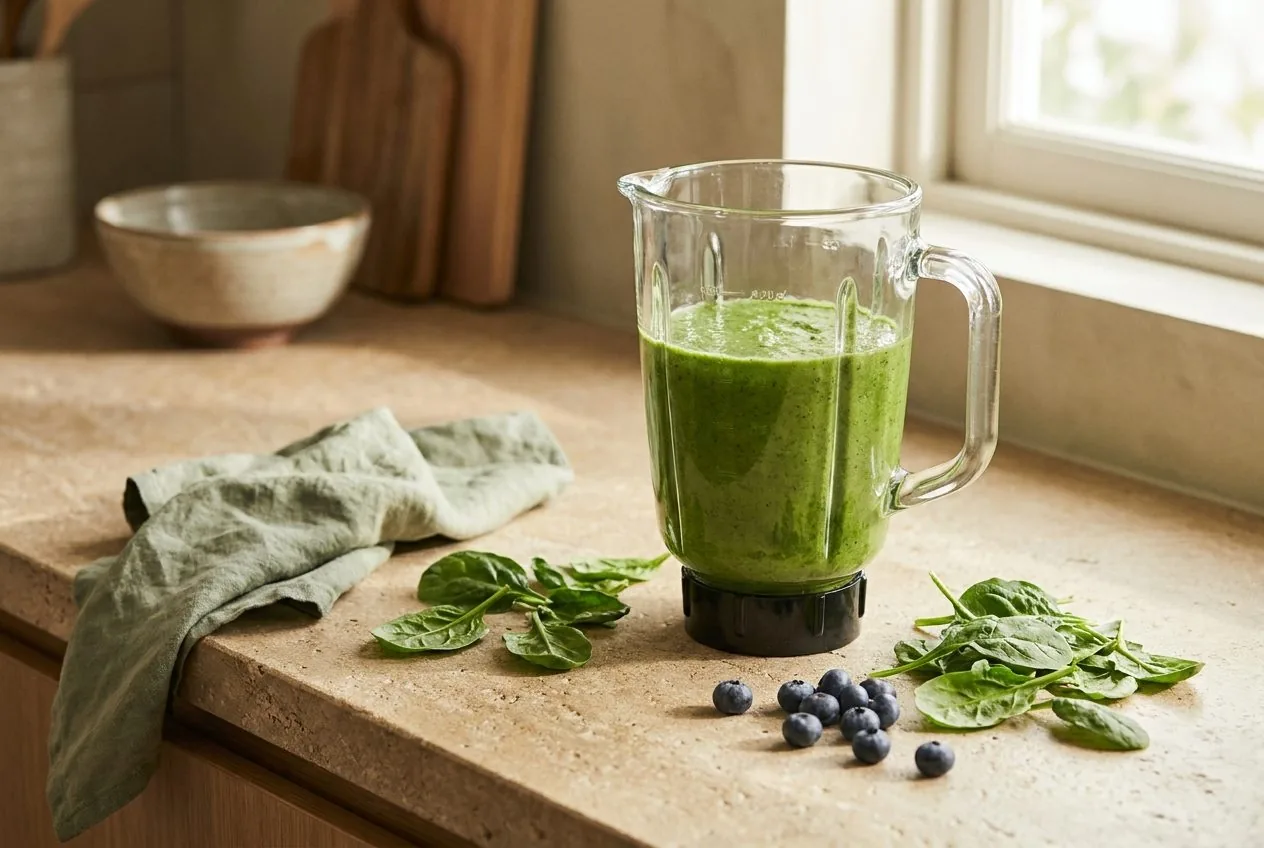
Which blender is actually worth it for daily smoothies?
- Best overall is the Vitamix E310 Explorian (around $380, 5-year warranty); best budget is the Hamilton Beach Power Elite at around $40.
- Seven picks are matched to real routines: quiet early mornings, single-serve, frozen-fruit loads, easy cleanup, and buy-once premium.
- Power, cleanup time, and warranty predict whether a blender survives daily use; presets mostly do not matter.
- Picks come from spec comparisons and owner feedback, not a lab test; prices shift constantly, so check current pricing.
- Your current $30 blender is fine if it keeps up with your recipes; upgrade only when the machine is the reason smoothies stop happening.
A daily smoothie habit lives or dies on one boring question: does your blender make the morning easier or harder? If it stalls on frozen berries, leaves gritty flecks of spinach, or wakes the whole house at 6 a.m., you will quietly stop making smoothies within a month. Not because you lack discipline. Because friction wins.
So before you spend anything, a promise about how this list was built. We have not run a blender lab, and we will not pretend otherwise. These seven picks are based on our research, spec comparisons, and owner feedback: what long-term owners consistently praise, what they complain about after the honeymoon period, and which specs actually matter for the frozen-fruit-heavy recipes we publish. Prices shift constantly, so treat every figure below as approximate and check current pricing before you buy.
How We Chose
Three things matter far more than the marketing suggests:
- Power and blade design. Daily smoothies mean frozen fruit, fibrous greens, and seeds. Underpowered motors stall, overheat, or leave chunks. Wattage is a rough proxy, blade and jar geometry matter just as much.
- Cleanup time. A blender that takes four minutes to clean gets used half as often as one that takes forty seconds. Owner feedback is remarkably consistent on this.
- Durability and warranty. A cheap blender replaced every 18 months is not cheap. Warranty length is one of the most honest signals a manufacturer sends.
- Fit for the actual habit. A 72 oz pitcher is wasted on one person, and a single-serve cup frustrates a couple who blend together. We matched each pick to a real morning routine, not a spec sheet contest.
The Quick Comparison
| Pick | Model | Price band | Power | Jar size | Warranty | Noise level |
|---|---|---|---|---|---|---|
| Best overall | Vitamix E310 Explorian | Around $380 | 2.0 peak HP | 48 oz | 5 years | Loud |
| Best budget | Hamilton Beach Power Elite | Around $40 | 700 W | 40 oz | 3 years | Loud for its size |
| Best quiet | Hamilton Beach Professional Quiet Shield | Around $215 | 1,500 W | 32 oz | 5 years | Noticeably quieter |
| Best single-serve | NutriBullet Pro 900 | Check listing | 900 W | Single-serve cups | Check listing | Moderate |
| Best for frozen fruit | Ninja Professional Plus BN701 | Around $100 | 1,400 peak W | 72 oz | 1 year | Loud |
| Easiest cleanup | Breville Fresh & Furious | Around $200 | 1,100 W | 50 oz | 3 years | Moderate |
| Best premium | Vitamix Ascent A3500 | Around $700 | 2.2 peak HP | 64 oz | 10 years | Loud, slightly contained |
All prices are approximate as of mid-2026; check current pricing, because blenders go on sale constantly.
Best Overall: Vitamix E310 Explorian
Around $380, check current pricing.
The E310 is the entry point to the brand that owners keep for a decade, and that longevity is the whole argument. It runs a 2.0 peak horsepower motor through a 48 oz container (Vitamix), which is the right size for one or two daily smoothies rather than family batches. In owner feedback, the recurring theme is texture: kale, frozen berries, chia, and flax come out uniformly smooth, with none of the gritty specks cheaper machines leave behind.
The honest downsides: it is loud and it has no presets. The container is dishwasher safe, and a drop of dish soap and thirty seconds on high does most of the cleaning for you. The 5-year warranty is the quiet star here. If you plan to blend five mornings a week for years, this is the buy-once option at its most reasonable price.
Best Budget: Hamilton Beach Power Elite
Around $40, check current pricing.
Nobody needs to spend hundreds to start a smoothie habit, and the Power Elite is the proof. It is a simple 700 W machine with a 40 oz glass jar and a pour spout, backed by a 3-year limited warranty (Hamilton Beach), and at this price it is a genuinely good tool with known limits. Owner feedback is clear about what those limits are: it handles soft fruit, spinach, yogurt, and modest amounts of frozen fruit well, but it will complain if you pack the jar with rock-hard berries and no liquid.
The workarounds are easy. Add your liquid first, use slightly smaller frozen pieces, and give it a few extra seconds. Do that and this little machine will happily make every recipe we publish. Expect texture that is good rather than silky: an occasional berry seed, a fleck of spinach, nothing that ruins a glass. If you are still deciding whether smoothies are your thing, start here and upgrade only when this one holds you back.
Best Quiet for Early Risers: Hamilton Beach Professional Quiet Shield
Around $215, check current pricing.
If you blend at 5:45 while the house sleeps, this is your pick. The Quiet Shield pairs a strong 1,500 W motor with a sound enclosure (Hamilton Beach) that drops the shriek to a hum you can talk over. It is not silent, and no honest review will tell you a powerful blender can be, but owners consistently describe the difference as the reason they stopped feeling guilty about early blending.
The 32 oz jar suits single servings, and the motor has no trouble with frozen fruit at this size. Downsides from owner feedback: the shield adds bulk on the counter and one more part to wipe down. A fair trade, we think, for a peaceful kitchen at dawn.
Best Single-Serve: NutriBullet Pro 900
Check current pricing.
The NutriBullet formula is simple: blend in the cup, twist off the blade, drink from the same cup, and the only cleanup is a blade ring and a lid. For one person making one smoothie a day, that workflow is hard to beat, and the 900 W motor handles frozen fruit and greens far better than the older, weaker models that gave bullet blenders a chunky reputation.
Owner feedback flags two things worth knowing. The blade gaskets are a wear item and may need replacing after long daily use, and the single-serve cup caps your recipe size, so oat-heavy, extra-thick blends need a little more liquid. On texture, it earns its keep: frozen berries and spinach come out smooth enough that most owners never miss a full-size pitcher. If counter space is tight or you just hate washing pitchers, this is the pick. If you want something prettier on the counter, the Beast Mini Blender does the same job with a design-forward look, though owners are split on cleaning its ribbed vessel.
Best for Frozen Fruit: Ninja Professional Plus BN701
Around $100, check current pricing.
Ninja’s stacked-blade tower is a different approach to the same problem: instead of pulling food down into one blade, it slices through the whole pitcher at several levels at once. For big loads of frozen fruit, it works brilliantly, and owners regularly say it chews through solid frozen berries that stall similarly priced machines. The 72 oz pitcher also makes it the family-size option on this list (Ninja), useful if you and your partner blend at the same time.
Trade-offs, honestly stated: it is loud, the exposed blade stack demands careful washing, and on leafy greens the final texture is a half step behind a Vitamix. But per dollar of frozen-fruit power, nothing here beats it.
Easiest Cleanup: Breville Fresh & Furious
Around $200, check current pricing.
Cleanup is the silent habit-killer, and Breville clearly designed against it. The Fresh & Furious has a lightweight 50 oz Tritan jug that owners describe as dramatically easier to handle and rinse than heavy glass, and a dedicated one-touch clean cycle (Breville). Breville also markets it as a quiet blender, which makes it a sneaky second option for early risers.
The 1,100 W motor sits in the comfortable middle: more than enough for daily smoothies with frozen fruit, not quite premium-tier for nut butters or the thickest blends. The 3-year warranty is shorter than the Vitamix picks. If your last smoothie phase ended because the blender was annoying to wash, this is the machine that removes the excuse.
Best Premium: Vitamix Ascent A3500
Around $700, check current pricing.
The A3500 is what you buy when you know the habit is permanent. Five presets including a self-cleaning cycle, a programmable timer, a 64 oz low-profile container that fits under cabinets, and a motor that treats frozen fruit as a rounding error. The 10-year warranty is the longest of any pick here (Vitamix) and reframes the price: spread over a decade of daily use, it costs less per month than one coffee-shop smoothie.
Owner feedback is glowing about consistency and lifespan, and candid about the rest: it is still loud, the smart-detect containers are expensive to add, and most people will never use half the presets. The self-clean cycle, though, is the feature owners mention most: soap, water, one button, done. If the price makes you flinch, buy the E310 and never look back. If you want the countertop equivalent of a reliable workhorse with every convenience, this is it.
Make Any Blender Last Longer
Whichever machine you choose, a few habits stretch its lifespan by years, and owner feedback suggests most early failures trace back to skipping them:
- Liquid first, always. Running blades against dry frozen fruit strains the motor and dulls the blades. Pour the liquid in before anything else and let it do half the work.
- Rinse immediately. A thirty-second rinse right after pouring beats five minutes of scrubbing dried smoothie at noon. For most machines, warm water and a drop of dish soap on a short blend cycle finishes the job.
- Smaller frozen pieces for smaller motors. If your blender is under about 1,000 W, break banana into chunks before freezing and let rock-hard fruit sit out for five minutes. Your motor will run cooler and last longer.
- Check the gaskets. On bullet-style blenders especially, the rubber sealing ring is a wear item. If you notice leaks or a faint burnt smell, stop and inspect before you blame the whole machine.
- Do not run it past its limits. Long continuous blends heat any motor. If a smoothie needs more than a minute of blending, pulse in stretches and give the machine a breath.
Common Blender Questions
How many watts do I actually need? For daily smoothies with frozen fruit, roughly 1,000 W and up means you stop thinking about power entirely. Between 600 and 1,000 W works fine with the technique above. Below that, stick to mostly fresh fruit and be patient.
Glass or plastic jar? Glass resists scratches and odors but is heavy and breakable. Nearly every high-end blender uses BPA-free Tritan plastic because it is light and tough; it can cloud after years of daily use, which is cosmetic, not a health issue.
Are refurbished models worth it? Often, yes, especially for premium brands where certified refurbished units cost meaningfully less and still carry a multi-year warranty. Read the specific warranty terms on the listing before you commit, because they vary by seller.
Do presets matter? Less than the marketing implies. Most owners settle into using start, stop, and maybe the self-clean cycle. Buy presets if you like them; do not pay a premium for them expecting a different smoothie.
Who Should NOT Upgrade
An honest gear guide has to include this section. Your current $30 blender is completely fine if:
- You make two or three smoothies a week, not seven, and it keeps up.
- Your recipes lean on fresh fruit, yogurt, and greens rather than mountains of frozen fruit.
- You are willing to add liquid first and blend a little longer for the same result.
- The texture already makes you happy. Texture is a preference, not a moral standard.
A new blender will not make you healthier, and it will not build the habit for you. The habit gets built by recipes you actually enjoy and mornings that stay simple. If your machine turns on and blends what you put in it, put the money toward good frozen fruit instead. Upgrade when, and only when, your blender is the reason smoothies are not happening.
There is also a middle path worth naming: keep the old blender and change your technique. Liquid first, smaller frozen pieces, a few extra seconds of blending. In our research, that combination closed most of the gap owners complained about before they upgraded. Try it for two weeks before you spend anything.
Matching the Machine to the Habit
Whichever pick fits your budget, the point is what comes out of it. Daily smoothies for women over 40 work best when they are protein-first and heavy on frozen fruit and fiber, which is exactly what these machines are chosen to handle. Start with the 15 recipes in our high-protein smoothie formula guide, then use the satiety-built recipes in our breakfast smoothies that hold you until lunch for weekday mornings. Both articles lean on frozen berries, oats, and seeds, so “handles frozen fruit without drama” was the bar every pick above had to clear. You will find the rest of our recipe and prep library in the Smoothies & Simple Meal Prep section.
And if you are considering pairing a new blender with a structured plan, read our honest review of the popular 21-day smoothie program first. A program is a bigger commitment than a kitchen appliance, and it deserves the same clear-eyed look at what it can and cannot do.
The short version of this whole guide: buy the cheapest blender that will not fight you every morning, and spend the saved attention on the habit itself.
Sources & references
- Vitamix, Explorian Series E310 (opens in new tab)
- Vitamix, Ascent Series A3500 (opens in new tab)
- Hamilton Beach, Power Elite Blender 58148J (opens in new tab)
- Hamilton Beach, Professional Quiet Blender 58870 (opens in new tab)
- SharkNinja, Ninja Professional Plus Blender BN701 (opens in new tab)
- Breville, the Fresh & Furious BBL620 (opens in new tab)
Before you go
The 7-Day Protein-First Meal Plan for Women Over 40
A complete protein-first week, finished for you: your personal protein target, a one-page shopping list, 21 recipes at 25-35 g protein each, and a timed 90-minute prep schedule. Printable PDF, paired with a free 7-lesson email course.
Free guide
The 7-Day Protein-First Meal Plan for Women Over 40
A complete protein-first week, finished for you: your personal protein target, a one-page shopping list, 21 recipes at 25-35 g protein each, and a timed 90-minute prep schedule. Printable PDF, paired with a free 7-lesson email course.