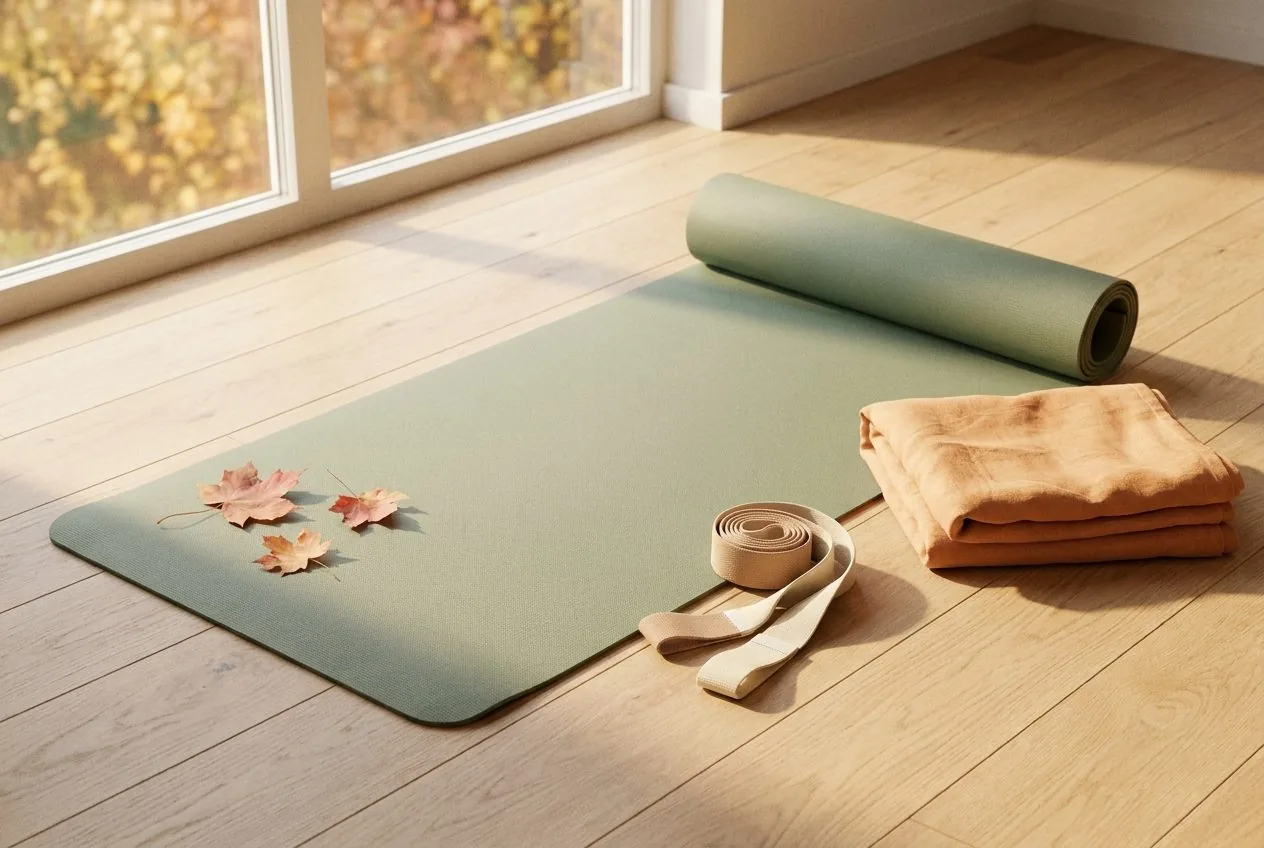
If the darker mornings and cooler air have your body feeling stiff and your summer movement habit somewhere out the window, you are not behind and nothing is wrong with you. Fall simply asks for a different rhythm than summer did, and a stiff, cool-weather body wants gentleness, not a punishing new plan. The answer is not an ambitious workout you dread by Wednesday. It is a short, gentle routine that eases you into movement, builds a little steady strength, and leaves you feeling looser and calmer, one unhurried session at a time.
The routine, in one line: warm up with easy mobility on the mat, add a few light resistance-band moves for gentle strength, spend a couple of minutes on standing steadiness, cool down with calm mat moves and slow breathing, and keep the whole thing short enough to repeat most days. Build it gently, and it will still be there when the mornings turn frosty.
This article is for information only and is not medical advice. Talk to your healthcare provider before starting a new exercise routine, especially if you have joint injuries, heart conditions, or issues with balance or dizziness.
Why gentle movement suits fall after 40
There is a comforting reason your body feels tighter as the season turns, and it is worth hearing before the routine. Cooler air and darker mornings tend to leave muscles feeling stiffer and make it that much harder to get going, and a summer of loose, improvised movement rarely carries a clear structure into September. That is a transition, not a personal failing, and the way through it is to rebuild gently rather than to force yourself back to whatever you were doing in July.
After 40, a steady, gentle routine matters a little more than it used to, because looser joints, steady strength, and even energy all respond well to frequent, comfortable movement and poorly to sporadic, punishing effort. That is not a reason for pressure. It is a reason to keep the routine kind and short, so it survives a busy week and the darker weeks ahead. You are not chasing a perfect autumn. You are building a good-enough movement habit that keeps.
The gentle fall routine, step by step
Here is the whole routine in five unhurried steps. The aim is a session of roughly twenty minutes you could do most days, warm and comfortable, never rushed. Set up on a cushioned, non-slip mat, keep something sturdy nearby for the balance work, and only ever move as far as feels easy.
- Warm up with easy mobility. Begin on the mat with a few minutes of slow movement to loosen a stiff body. A gentle cat-cow through the spine, a slow supine twist, and an easy reach overhead take the main areas through a comfortable range and wake everything up. Move with your breath, keep it small, and do not chase a deeper position. This is the on-ramp that makes the rest feel good.
- Add light band strength. Once you feel a little looser, move through two or three gentle resistance-band moves for the hips, back, and shoulders. Keep the band light and the tempo slow: a seated row, a gentle band pull-apart, and a standing hip abduction are plenty to build steady strength without strain. Stop each set while it still feels comfortable. Light and controlled beats heavy and hurried every time here. If you ever want to add a first weighted tool to this step, our kettlebell vs dumbbells vs bands comparison helps you choose gently.
- Work a little standing steadiness. Spend a couple of minutes on simple balance, which quietly matters more as leaves and frost make the ground slick. Stand tall and shift your weight slowly from foot to foot, then try a light single-leg stand with a hand resting on a counter. Keep it easy and unforced. A few minutes of this, done often, supports the steady footing that helps you move through fall with confidence; the CDC lists exercises that strengthen the legs and improve balance among its fall-prevention steps (CDC).
- Cool down with calm mat moves. Come back to the mat to settle the body. A slow supine twist to each side and a knee-to-chest hug, breathing slowly, release the lower back and hips and bring the session to a calm close. Let gravity do the work rather than forcing anything, and linger here as long as it feels nice. This quiet finish is what leaves you feeling looser and more at ease.
- Keep it short and frequent. The routine works because it is easy enough to repeat, so aim for a short session most days rather than one long one a week; federal guidelines note that any amount of physical activity has some health benefits (HHS). Treat a missed day as an ordinary day you simply pick back up tomorrow, not a collapse. The habit is the pattern over weeks, and a gentle routine you actually keep will always beat an ambitious one you quit.
A simple weekly frame
You do not need a rigid schedule to make this stick, just a light frame to lean on. Here is one gentle way a week might look, adjusted to your own life and energy.
| Day type | What it looks like | Why it helps |
|---|---|---|
| Most mornings | Full routine, all five steps, unhurried | Loosens a stiff body and steadies energy early |
| A busy day | Just the mobility warm-up and cool-down | Keeps the habit alive without asking much |
| Twice a week | Add an extra few minutes of band strength | Builds gentle strength without overloading |
| Any day off | Rest, or a short walk instead | Recovery is part of the plan, not a failure |
The point of a frame this loose is that it bends without breaking. If a day goes sideways, you have not fallen off anything; you have had a normal day. Roll the mat back out tomorrow. And on the days you fancy gentle indoor cardio instead, a few quiet minutes on a compact mini stepper slots into the same frame.
Common mistakes that undo a gentle routine
A few easy missteps turn a kind routine into a frustrating one. Sidestep these and it works.
Going too hard, too soon. The classic error is treating a gentle routine like a bootcamp, adding heavy bands and long holds in week one. Keep the band light and the sessions short at first, and let the effort grow only once the habit feels easy.
Skipping the warm-up. Jumping into strength or balance on a cold, stiff body is uncomfortable and easy to quit. The few minutes of mobility at the start are what make everything after it feel good, so never skip them when the mornings are cold.
Rushing through. Speed empties these moves of their benefit. Slow down, match the movement to your breath, and let each part unfold gently. This is a routine you savor, not one you race.
Treating a missed day as a collapse. One skipped session means nothing. The women who keep a fall routine are not the ones who never miss; they are the ones who miss, shrug, and return the next morning.
The gear that actually helps
You can start this routine with nothing but a bit of floor and your own body weight. Two inexpensive pieces of gear, though, quietly remove the barriers that make people quit, so they are worth having.
A cushioned, non-slip yoga mat is the one that matters most. It keeps knees, hips, and hands comfortable on a hard autumn floor and stops you sliding during the moves, both of which make you far more likely to get down and actually do the routine. If you are deciding how much cushioning to buy, our thick vs thin yoga mat comparison settles the knee-comfort question. A light set of resistance bands is the other. Bands add gentle, adjustable strength without heavy weights or a rack (a 2024 review of studies in adults over 60 found elastic band training improved upper-body strength, flexibility, and balance, per PLoS One), they store in a drawer, and a lighter band is exactly right for building steady strength after 40. If you would like help choosing, our guide to the best resistance bands for women over 40 walks through what to look for.
When a little recovery gear helps
This gentle routine solves the “how do I ease back into movement” problem. It does not always solve the “my calves and upper back feel tight afterward” one. If you finish a session noticing everyday tightness, a simple recovery tool can make the whole habit more comfortable and more likely to last. A foam roller is the classic, inexpensive choice, and our honest best foam roller for fall recovery after 40 review lays out what to look for and who can happily skip it. Treat recovery gear as a pleasant extra that supports the routine, not as the main event.
The honest bottom line
A gentle fall movement routine will not transform your body, and no honest guide should pretend otherwise. What slow, regular movement genuinely tends to support is looser joints, steadier footing, gentle strength, and more even energy through the shorter, busier days. Warm up with easy mobility, add a little light band strength, work a couple of minutes of balance, cool down with calm mat moves, and keep the whole thing short enough to repeat. Roll out the mat this week, keep it kind, and let the quiet, unglamorous habit carry you into fall. Movement is only half the fall reset; our food-first habits for steady energy covers the kitchen half. You will find more gentle routines in our gentle strength section.
Frequently Asked Questions
- How often should I do this fall movement routine?
- A short session most days does far more for steady energy and looser joints than one long, ambitious workout once a week, because a gentle routine responds best to frequent, comfortable repetition. You can run the whole thing in about twenty minutes, or split it into a few minutes of mobility in the morning and a little band work later. Even doing half of it counts. Aim for consistency rather than intensity, and let the frequency, not the effort, do the work. As always, this is general information and not medical advice.
- Do I need any equipment to start?
- Almost none. A cushioned, non-slip yoga mat makes floor work comfortable enough that you actually get down and do it, and a light resistance band adds gentle strength without heavy weights or a rack. That is the whole kit, and both are inexpensive. You can begin with just the mat and your own body weight, then add a band once the habit feels easy. The gear is there to remove barriers, not to complicate a routine that is meant to stay simple.
- Is this routine safe if I am stiff or new to movement?
- It is built to be gentle and beginner-friendly, taking each area through a comfortable range rather than forcing anything, which suits a stiff or new body well. Move slowly, only go as far as feels easy, keep something sturdy nearby for the balance work, and never push into sharp pain. Use the mat for cushioning and skip anything that does not feel right. If you have joint injuries, a health condition, or issues with balance or dizziness, check with your provider first so you can adapt the moves to what your body needs.
- How long before I notice a difference?
- It varies from person to person, but many people find that a few weeks of steady, gentle practice leaves them feeling looser in the mornings, a little steadier on their feet, and more even in their energy through a busy day. The trick is to keep each session small enough that you rarely skip it, because every day you keep makes the next one easier. Give it a month of unhurried repetition before you judge it, and adjust one small thing at a time rather than starting over.
Sources & references
Before you go
The 7-Day Protein-First Meal Plan for Women Over 40
A complete protein-first week, finished for you: your personal protein target, a one-page shopping list, 21 recipes at 25-35 g protein each, and a timed 90-minute prep schedule. Printable PDF, paired with a free 7-lesson email course.
Free guide
The 7-Day Protein-First Meal Plan for Women Over 40
A complete protein-first week, finished for you: your personal protein target, a one-page shopping list, 21 recipes at 25-35 g protein each, and a timed 90-minute prep schedule. Printable PDF, paired with a free 7-lesson email course.