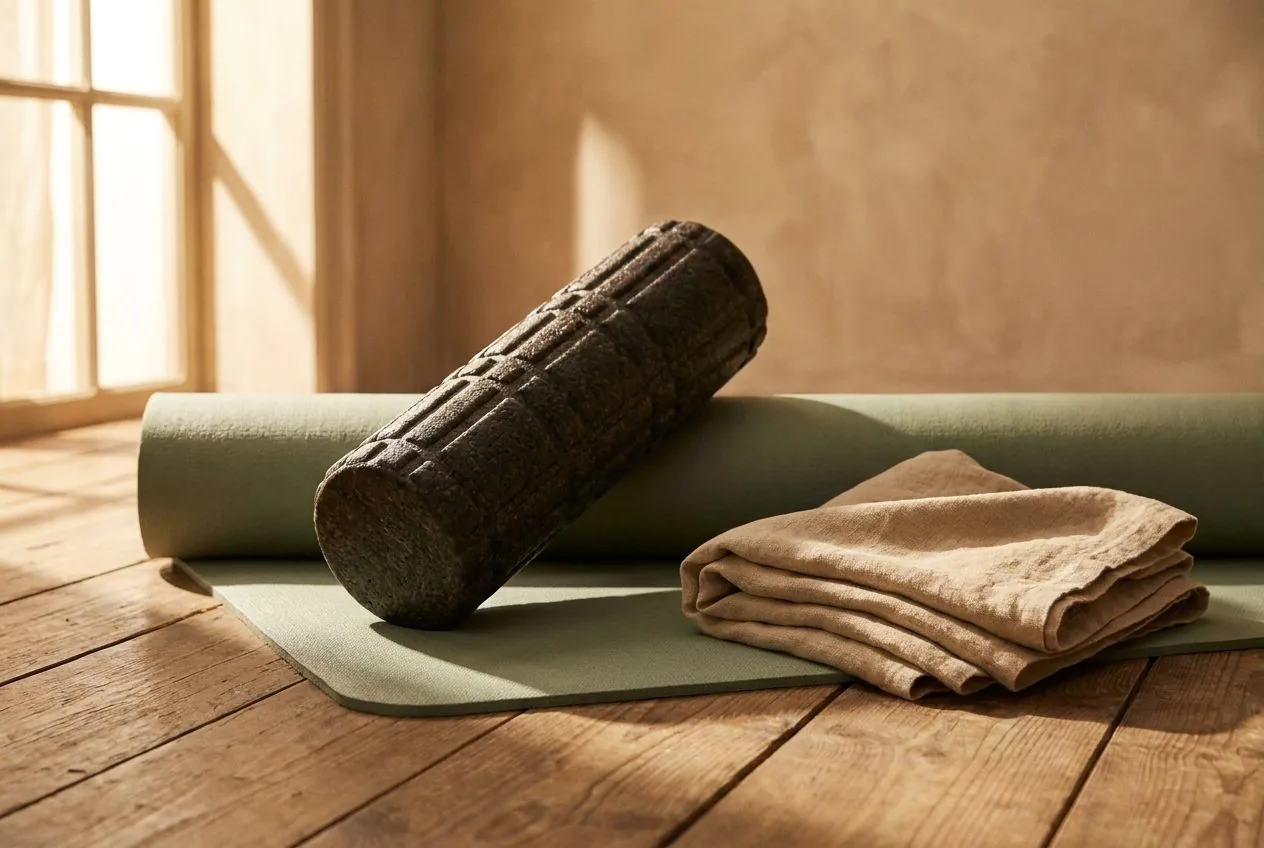
For most women over 40 who finish a walk, a gentle strength session, or a long day on their feet with tight calves, stiff hips, or an achy upper back, yes: a foam roller is worth buying. It is usually inexpensive, has nothing to charge or break, and gives you a simple, self-paced way to help tight muscles feel looser. The honest caveats matter, though. Rolling is a comfort and mobility tool, not a treatment, and if you already own a massage gun that gets happy regular use, a roller mostly duplicates it. This guide covers what rolling realistically does for stiffness, how to choose between smooth and textured, who gets real value from one, and who can keep their money.
This verdict comes from a category review: we judged the features that matter for a woman over 40, not a lab test of one branded model. Foam rollers are a crowded market and prices move around, so we focus on what stays true no matter which model is in stock this season.
Our verdict: worth buying for most, as a medium-firm, smooth or lightly textured roller around 18 inches long. 8/10. For women over 40, the winner is not the hardest, knobbliest roller but a medium density that eases tightness while staying comfortable enough to use often. It loses points only for its honest ceiling: a roller comforts muscles; it does not treat anything.
This article is for information only and is not medical advice. Talk to your healthcare provider before starting a new recovery or exercise routine, especially if you have joint injuries, osteoporosis, circulation conditions, or are pregnant.
What rolling realistically does for stiffness after 40
A foam roller is about the simplest recovery tool there is: a firm cylinder you slowly roll a muscle over. What that genuinely tends to support is how loose and comfortable the muscle feels, easing the everyday tightness many women notice in the calves, thighs, hips, and upper back after activity. The measured effects are modest: a 2019 meta-analysis found small gains in flexibility and reduced muscle pain perception after exercise, with otherwise minor or negligible effects (Frontiers in Physiology). Tight calves after a walk or a few quiet minutes on a compact mini stepper are exactly its home turf. Looser-feeling muscles make gentle strength and mobility work more comfortable, and a few slow minutes on a tight spot can be a genuinely nice way to wind down. That is the realistic promise, and three practical things carry it.
It is gentle and self-paced. You control every bit of the pressure with your own body weight, so you decide exactly how much a tender calf or a tight upper back gets. Ease off by taking weight onto your hands, or lean in a touch for more. That control matters more after 40, when a little goes a long way and you want to ease a muscle, not batter it.
It costs almost nothing and lasts. A good foam roller is one of the cheapest pieces of recovery gear you can buy, has nothing to charge or break, and stores in a corner. For a modest price, it quietly lowers the bar to a recovery habit that sticks.
It pairs with gentle movement. A roller by the mat turns “I should stretch” into something you actually do while an episode plays. That is exactly the kind of low-effort habit that lasts through a busy fall, and our gentle fall movement routine gives you a seasonal rhythm worth recovering from.
The honest limit sits right beside the value: a foam roller eases how a muscle feels; it does not do the deeper work of building strength or genuinely healing anything. For most women that is completely fine, as long as you know it is a comfort and mobility tool rather than a treatment. Rest, sleep, easy movement, and enough protein remain the things that actually help your body recover.
Smooth or textured: the choice that decides comfort
If you buy one, this is the decision that matters most after density. A smooth roller spreads pressure evenly along the muscle, which feels friendly, soothing, and easy to keep gentle; Cleveland Clinic notes that beginners benefit from smooth surfaces (Cleveland Clinic). A heavily ridged or knobbled roller targets pressure sharply, which some people enjoy on a specific stubborn spot but many find simply too intense on a midlife body. The same logic applies to firmness: too soft and the roller does little, too hard and every session feels like punishment. A medium-firm density with a smooth or lightly textured surface is the profile that keeps rolling pleasant enough to actually do, and pleasant enough to keep doing is what produces the benefit. Start there, and only go firmer or knobblier if a well-established habit genuinely asks for it.
Who should buy one
Buy if you often notice tight calves, stiff hips, or an achy upper back after movement, you like the idea of an easy, low-cost recovery habit you can do by the mat, and you will spend a few gentle minutes on it a couple of times a week. For that reader the roller is an easy yes: it asks nothing of your schedule, costs little enough to try without a second thought, and gives a controllable way to ease everyday tightness.
Who can happily skip it
Skip if you rarely feel muscle tightness, or you already have a recovery routine you enjoy. Skip it too if a massage gun already covers this job for you; the two tools overlap almost completely, and our foam roller vs massage gun comparison weighs them side by side if you are deciding between formats, while our massage gun guide for recovery after 40 covers what to look for if powered wins. And if you have osteoporosis, a circulation condition, an injury, or are pregnant, check with a clinician before rolling near the affected area (Cleveland Clinic). Gear you would use with caution is gear worth pausing on.
What to look for if you decide to buy
Five things separate a foam roller you will reach for weekly from one that ends up under the bed:
- How firm is it? Density is the single most important feature. Too soft and it does little; too hard and it feels punishing on a midlife body. A medium-firm roller eases tightness while staying comfortable enough to use often.
- How is the surface? A smooth roller spreads pressure evenly and feels friendly; a heavily ridged one targets pressure sharply and can be too intense. Smooth or lightly textured is the kinder choice for most.
- What length is it? A roller around 18 inches handles long muscles like the calves and thighs and still supports the whole upper back when you lie across it. Shorter travel rollers trade some of that versatility for packability.
- Is it stable and grippy? A roller that holds its shape and does not skid on the floor lets you relax into it. A cheap one that squashes flat or slides is an easy excuse to quit.
- Will it last? A dense, quality foam holds its firmness longer. The cheapest rollers can go soft and lose their usefulness sooner.
| Feature | What to look for | Why it matters after 40 |
|---|---|---|
| Density | Medium-firm, not rock hard | Eases tightness without feeling punishing |
| Surface | Smooth or lightly textured | Even, comfortable pressure over sharp intensity |
| Length | Around 18 inches | Handles long muscles and supports the upper back |
| Stability | Holds shape, grips the floor | Lets you relax into it instead of bracing |
| Durability | Dense, quality foam | Keeps its firmness longer |
All prices are approximate as of late 2026 and move constantly, so check current pricing before you buy.
Whichever roller you choose, begin gently: take some of your weight onto your hands and feet so the pressure stays comfortable, roll slowly along the length of a muscle rather than grinding on one spot, and keep each area to about one to two minutes (Cleveland Clinic). Lean in a little more only if a well-warmed muscle genuinely wants it, and keep the roller off your lower spine, joints, and any sore or injured area.
Pros and cons
| Pros | Cons |
|---|---|
| Eases everyday muscle tightness comfortably | A comfort tool, not a treatment or a cure |
| You control every bit of the pressure | Too-firm textured models can feel punishing |
| Inexpensive, with nothing to charge or break | Cheap foam can go soft sooner |
| Sits by the mat, so the habit is effortless | Easy to misuse on the spine or joints |
| Pairs well with gentle movement and mobility | Not suitable for injured or swollen areas |
Honest criticisms
No product category is perfect, and pretending otherwise helps no one.
The cheapest ones do not last. The lowest-priced rollers can use soft foam that squashes flat and loses its firmness, which quietly makes them useless. If your budget only stretches to the very bottom of the range, you may find yourself replacing it sooner than you hoped.
The aggressive ones can be too much. The firmest, most heavily ridged rollers are marketed as more effective, but for many women over 40 they simply feel harsh, and a tool that hurts is a tool you avoid. Firmer is not better here; comfortable enough to use often is better.
It is easy to misuse. A foam roller is for muscle, not bone or joint. Rolling directly on your lower spine, joints like the knees, or an injured area is a mistake. The tool asks a little care in where you use it, and any honest guide has to say so plainly.
It does not replace the basics. A roller can help a muscle feel looser, but rest, sleep, gentle movement, and enough protein are what genuinely help your body recover and get stronger. Treat it as a pleasant extra, not the main event.
What we will not promise
A foam roller will not heal an injury, fix a sore back for good, or do the real work of recovery for you, and no honest guide should pretend otherwise. What gentle, sensible use genuinely tends to support is muscles that feel a little looser, a nicer sense of readiness before movement, and a calmer wind-down after it. A 2020 meta-analysis found that rolling gives short-term gains in joint range of motion, similar to stretching rather than better than it (Sports Medicine). Results depend on using it gently and pairing it with the things that truly matter: sleep, rest days, easy movement, and enough protein. Buy the tool for the comfort it gives, and let the basics do the deeper work.
The honest bottom line
So, is a foam roller worth buying for recovery after 40? If everyday tightness is part of your weeks, yes, easily. The right buy is not the firmest or the knobbliest; it is a medium-firm, smooth or lightly textured model around 18 inches long, made from dense foam that keeps its shape. That profile eases tightness without the harshness that makes people quit, suits both long muscles and the upper back, and costs little enough to try without a second thought, a calm companion for fall walks and gentle sessions. Start gently, roll slowly along the muscle, keep it off your spine and joints, and pair it with the basics that do the real work.
If you want to put a roller to use, our foam roller moves for mobility after 40 walks through gentle ways to use one, and the rest of our gentle strength section gives you calm routines worth recovering from. And since most rolling happens on the floor, a comfortable base helps: our thick vs thin yoga mat comparison helps you pick cushioning that is kinder to your knees.
Frequently Asked Questions
- Is a foam roller worth it after 40?
- For most women who regularly notice tight calves, stiff hips, or an achy upper back after movement, yes. A good roller is inexpensive, has nothing to charge or break, and gives you a simple, self-paced way to help tight muscles feel looser before or after gentle movement. It earns its keep through regular, unglamorous use, a few minutes at a time. If muscle tightness is rarely on your radar, or you already have a recovery tool you enjoy, you can happily skip it.
- Can a foam roller really help my muscles recover?
- Gentle rolling tends to support how loose and comfortable a muscle feels and can ease the tightness many people notice after activity, which is why so many keep one by the mat. Be clear-eyed about the limits, though: it is a comfort and mobility tool, not a treatment, and it will not heal an injury or replace rest, sleep, and enough protein. Think of it as a pleasant way to feel a little looser and more ready to move, and let the real recovery come from the basics. If you have an injury or a health condition, check with your provider before rolling near it.
- Smooth roller or one with ridges and bumps?
- A smooth roller is the friendlier choice for most beginners and for a gentle recovery habit, because it spreads pressure evenly and feels far kinder than a heavily textured one. The knobbly, ridged rollers target pressure more sharply, which some people like on specific spots but many find too intense after 40. If you are new to rolling or want something soothing rather than fierce, choose smooth. You can always add a textured one later if you find you want more focused pressure, but you rarely need it to feel the benefit.
- How often should I use a foam roller after 40?
- A few minutes on a tight area, several times a week, is a sensible rhythm, and more is not automatically better. Keep each spot to about one to two minutes, roll slowly along the muscle rather than parking on one point, and stop if anything feels sharp. It is a tool for easing everyday tightness and helping you feel looser before or after gentle movement, not something to grind on for long stretches. Little and often, kept gentle, is how to get the most from it without overdoing it.
- Do I need a foam roller if I already have a massage gun?
- Probably not, unless you want both formats. The two tools serve the same basic job of helping tight muscles feel looser, just differently: a gun brings focused percussion to one spot while you sit still, and a roller uses your body weight and slow movement, which many people find gentler and easier to control. If your massage gun already gets regular, happy use, a roller mostly duplicates it. If the gun feels too intense or fiddly, a roller is the calmer, cheaper alternative. Our comparison of the two lays out the trade-offs.
Sources & references
Before you go
The 7-Day Protein-First Meal Plan for Women Over 40
A complete protein-first week, finished for you: your personal protein target, a one-page shopping list, 21 recipes at 25-35 g protein each, and a timed 90-minute prep schedule. Printable PDF, paired with a free 7-lesson email course.
Free guide
The 7-Day Protein-First Meal Plan for Women Over 40
A complete protein-first week, finished for you: your personal protein target, a one-page shopping list, 21 recipes at 25-35 g protein each, and a timed 90-minute prep schedule. Printable PDF, paired with a free 7-lesson email course.