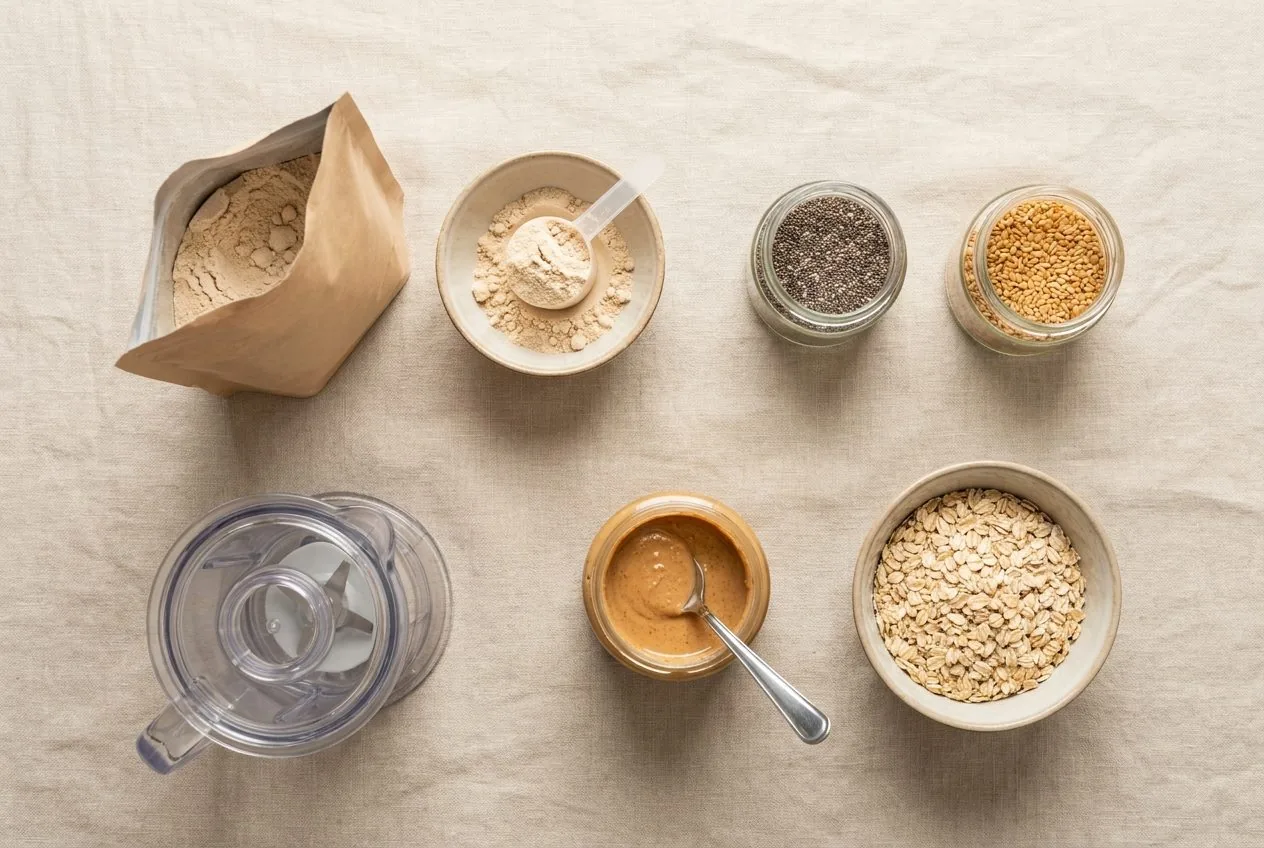
If you downloaded our free 7-Day Metabolism Reset, you already have five smoothie recipes and a full shopping list. What that guide deliberately does not do is tell you which products to buy, because the ingredients are named in plain English so you can shop your own store. This page is the companion to that list. It walks through the handful of items genuinely worth buying once, the reusable pantry staples that turn a good smoothie recipe into a five-minute morning habit, and it points you to the right blender guide instead of guessing.
A promise about how this list was built, first. We have not run a nutrition lab, and we will not pretend one ingredient changes your body. These are the practical, reusable items from the reset’s shopping list, chosen because they last for weeks, they raise the protein and fiber of a smoothie, and they remove the small frictions that quietly end a smoothie habit. Prices move constantly and change by brand and size, so we have skipped specific figures. Check current pricing before you buy, and start with what you already own.
This article is for information only and is not medical advice. Talk to your healthcare provider before changing your diet or exercise routine, especially if you have a medical condition or take medication.
The formula this kit is built around
Before the shopping, the reason for it. Every smoothie in the reset follows one simple over-40 formula, and this kit exists to make that formula easy to hit without measuring:
- 25 to 30 grams of protein, so the smoothie behaves like a meal instead of a snack in a glass (Current Opinion in Clinical Nutrition and Metabolic Care).
- A source of healthy fat, which adds staying power and makes the whole thing taste like more than blended fruit.
- Fiber-first carbs, from seeds, oats, and whole fruit rather than juice.
Protein matters more in midlife than it did in our thirties. From around 40, most of us gradually lose muscle (Current Sports Medicine Reports), and protein, alongside a little strength work, helps you hold onto the muscle you have. Most women fall short on fiber (American Journal of Lifestyle Medicine), and it steadies appetite and digestion. None of that requires a special product. It requires a few staples you keep on hand so the easy choice is also the good one. That is the entire job of this kit.
How to shop this list
You do not need all of it at once, and you almost certainly do not need to replace your blender. Think of the list in two layers. The reusable staples below are the buy-once items: a tub, two bags of seeds, a jar, and a bag of oats that quietly last through weeks of smoothies. The fresh groceries from the reset, the spinach, frozen berries, bananas, and milk, are just normal weekly shopping and are not worth a special guide.
Buy the staples one at a time if the total feels like a lot in one trip. If you can only start with one thing, start with protein powder or a tub of Greek yogurt, because protein is the pillar the whole formula stands on. Everything after that is a small, optional upgrade.
1. Protein powder: the fastest way to hit your number
What it is. A scoop of protein powder is simply the quickest, most consistent way to get 25 to 30 grams of protein into a glass. The reset’s recipes call for vanilla in most of them and chocolate in the Chocolate Cherry, and one tub of each covers every recipe in the guide with room to spare. Vanilla is the workhorse. If you only buy one, buy vanilla, because it disappears into berry, green, and peanut butter blends alike. Add chocolate later if you love a dessert-style evening smoothie.
Who it is for. Anyone who wants a smoothie to actually hold them until the next meal, and who would rather not build every glass around yogurt. It is especially handy on rushed mornings, when a scoop, some frozen fruit, and milk is genuinely a two-minute breakfast.
An honest note. Protein powder is a convenience, not a requirement. Greek yogurt and cottage cheese carry protein beautifully with no powder at all, and plenty of women prefer the whole-food route. If you do choose a powder, the flavor you enjoy matters more than any label claim, because the best protein source is the one you will actually drink. Treat it as food, not a supplement with special powers, and pick one that tastes good to you and sits well with your stomach.
2. Chia seeds: fiber and thickness in one spoon
What it is. Chia seeds are tiny seeds that soak up liquid and swell, which is why a single tablespoon turns a thin, watery smoothie into something thick and spoonable. They add fiber and a little plant-based fat, and they do it without changing the flavor at all. In the reset they appear in the Green Start and Golden Ginger recipes for exactly this reason.
Who it is for. Anyone whose smoothies come out too thin, and anyone trying to nudge their daily fiber up gently. Because chia has almost no taste, it is the easiest upgrade to sneak into a routine you already have. A tablespoon in almost any blend is a safe default.
An honest note. Chia is food, not a fix. It will not do anything dramatic, and more is not better, since a big scoop can make a smoothie gluey and sit heavily. One tablespoon is plenty. If you are new to added fiber, add it gradually and drink enough water, because a sudden jump can feel uncomfortable. One bag lasts a long time, so store it somewhere cool and it will outlast several tubs of everything else.
3. Ground flaxseed: the quiet fiber and omega upgrade
What it is. Ground flaxseed is flax that has been milled so your body can actually access what is inside, which is fiber and plant-based omega-3 fats known as ALA. It has a mild, nutty taste that vanishes into a berry or chocolate smoothie, and a tablespoon is the standard amount. The reset uses it in the Berry Protein smoothie.
Who it is for. The same reader as chia, with a slightly nuttier flavor and a different texture. Many women keep both and rotate them, since they do similar jobs in slightly different ways. If you only want one seed in your cupboard, either is a fine choice.
An honest note. Buy it ground, not whole. Whole flaxseeds tend to pass straight through without breaking down, and in one study whole seed did not raise blood ALA levels while milled seed did (Journal of the American College of Nutrition), so the ground version is the one that earns its place in a smoothie. Ground flax also goes stale faster than whole seeds because the fats are exposed, so keep it in the fridge or freezer and buy a size you will use within a couple of months. As with any seed, it is a small, helpful addition to a balanced smoothie, not a health treatment.
4. Nut butter: fat, flavor, and staying power
What it is. A jar of almond or peanut butter is the ingredient that makes a smoothie taste like a treat and keeps you full past mid-morning. A single tablespoon adds healthy fat and a little extra protein, and it is the backbone of the reset’s Peanut Butter Oat smoothie, which is built specifically to hold you until lunch.
Who it is for. Anyone whose smoothies leave them hungry an hour later, and anyone who finds fruit-only blends a little thin and unsatisfying. The fat is the point. It slows everything down and makes the glass feel like a meal rather than a snack.
An honest note. Reach for a jar whose only ingredients are nuts and maybe a little salt, and skip the ones loaded with added sugar and oils, because the plain versions taste better in a smoothie anyway. Almond and peanut are interchangeable here, so buy whichever you already like. A little goes a long way. One tablespoon is the sweet spot, since nut butter is calorie-dense and it is easy to turn a balanced smoothie into a very rich one with a heavy hand.
5. Rolled oats: cheap staying power and gentle fiber
What it is. A scoop of rolled oats blended into a smoothie adds soft fiber and a mild, oaty body that makes the drink feel more like breakfast. A quarter cup is the usual amount, and it disappears completely once blended. The reset leans on oats in the Berry Protein and Peanut Butter Oat recipes for exactly this reason.
Who it is for. Anyone who wants their morning smoothie to actually eat like a meal, and anyone looking for the least expensive upgrade on this whole list. Oats are a pantry staple you may already own, and they stretch a smoothie without stretching your budget.
An honest note. Plain rolled oats are all you need, and they cost a fraction of anything marketed as a special smoothie booster. There is no need for instant, flavored, or single-serve versions, which usually just add sugar and cost. If a raw-oat texture ever bothers you, soaking them in your liquid for a few minutes before blending softens everything. It is the humblest item on this list and one of the most useful.
The blender question: do not overthink it
You will notice a blender is not on this buy-once list, and that is deliberate. The best blender for your first month of smoothies is almost always the one already on your counter. If it turns on and blends what you put in it, you can make every recipe in the reset by adding your liquid first, using smaller frozen pieces, and giving it a few extra seconds.
When a blender genuinely becomes the reason smoothies are not happening, that it stalls on frozen fruit, leaves gritty greens, or wakes the whole house, then an upgrade is worth considering. Rather than repeat all of that here, we have a full guide: the best blenders for daily smoothies, compared by budget and need, with an honest section on who should not upgrade at all. Read that before you spend, not after.
What you already own, and who should skip most of this
An honest gear list has to say the quiet part out loud: you can make a great smoothie with almost none of these products. Fruit, greens, milk, and a tub of Greek yogurt will get you a protein-forward glass with nothing from this page. The staples above are conveniences that make the habit easier and the nutrition steadier, not requirements, and not a shortcut to a result.
You can happily skip most of this list if:
- You already keep Greek yogurt or cottage cheese on hand and are glad to build your protein around them.
- Your smoothies already come out thick enough and hold you until your next meal.
- You would rather spend the money on good frozen fruit, which does more for a smoothie than any single add-in.
No ingredient on this page will change your body, and none of them will build the habit for you. The habit gets built by recipes you actually enjoy and mornings that stay simple. Buy the one or two staples that solve a real problem you are having, and leave the rest until you miss them.
Common smoothie-kit mistakes
Buying everything at once. A full cart of powders and seeds on day one is the fastest way to end up with a cupboard of half-used bags. Start with protein, add one item at a time, and only buy what a recipe you love actually calls for.
Chasing “superfood” add-ins. The marketing around exotic powders is loud, but the honest workhorses are the plain staples on this list. Fancy add-ins rarely earn their price, and they are easy to skip without missing a thing.
Overloading the glass. More is not better. A heaping scoop of seeds and a big spoon of nut butter can turn a balanced smoothie into a very heavy, very rich one. Stick to about a tablespoon of each and let the recipe do its job.
Forgetting the fruit and greens. These reusable staples are the supporting cast. The frozen berries, banana, and spinach are what make the smoothie taste good and worth drinking, so do not let the pantry additions crowd them out.
Make the kit last, and cost less per smoothie
Because these are buy-once staples, a little storage care means you replace them far less often, which is where the real savings live. A few simple habits keep the whole kit fresh:
- Protein powder. Seal it tightly and keep it somewhere cool and dry. A clip or an airtight container stops it clumping, and it is easy to forget an open tub at the back of a warm cupboard for months.
- Chia seeds. These keep for a long time, but a cool, dark cupboard holds them at their best. One bag genuinely outlasts several tubs of everything else, so a modest size is plenty.
- Ground flaxseed. This is the one to watch. Once it is milled, the fats are exposed and it goes stale faster than whole seed, so store it in the fridge or freezer and buy a size you will finish within a couple of months.
- Nut butter and oats. Both keep well in a cupboard. Give natural nut butter a stir when you first open it so the oil folds back in, and an airtight container keeps oats from going stale or damp.
Buy sensible sizes rather than the biggest tub on the shelf, especially for anything you are trying for the first time. A staple you actually finish is cheaper than a bargain size that turns before you reach the bottom.
When a fully planned approach helps
Some women thrive on a shopping list and a recipe card, and this kit is built for them. Others do better when someone hands them the whole plan, the exact smoothies, the daily structure, and the sequence. If that is you, a structured program can remove the daily guesswork, and our honest review of the popular 21-day smoothie program tells you plainly what it can and cannot do before you spend a dollar. It is a tool for making protein-forward smoothies automatic, not a miracle, and as with any plan, if you have a medical condition, take medication, or have a history of disordered eating, talk to a clinician first.
If you would rather keep it free and self-directed, that works just as well. Put this kit to use with the recipes in our high-protein smoothie guide and the satiety-built blends in breakfast smoothies that hold you until lunch, and lean on the wider Smoothies & Simple Meal Prep section for the rest of the week’s meals. If protein at every meal is the piece you keep missing, thirty grams of protein per meal after 40 breaks it down without the math.
The honest bottom line
The reset names its ingredients in plain English on purpose, so you can shop your own store and your own budget. This companion page just tells you which of those items are worth buying once: a tub of vanilla protein powder, a bag each of chia and ground flaxseed, a jar of nut butter, and a bag of rolled oats. That short list covers every smoothie in the guide and lasts for weeks. Keep your current blender until it truly fights you, buy the staples one at a time, and let the habit, not the shopping cart, do the real work. The best smoothie kit is the smallest one that gets you reaching for the blender on a busy morning.
Frequently Asked Questions
- What do I actually need to buy to start making protein smoothies?
- Less than you think. A blender you already own is usually fine to start, and the only ingredients worth buying once are the reusable pantry staples: a tub of protein powder, chia seeds, ground flaxseed, a jar of nut butter, and a bag of rolled oats. Everything else on a smoothie shopping list, the fruit, greens, and milk, is regular grocery shopping you refresh each week. Start with what you have and add one item at a time.
- Is protein powder necessary for a smoothie, or can I use food?
- It is not necessary. Greek yogurt, cottage cheese, or milk can carry the protein in a smoothie without any powder at all, and many women prefer that. Protein powder simply makes it faster and more consistent to reach 25 to 30 grams in one glass, which is why our recipes offer it as an option rather than a rule. If you dislike powders or want to keep it whole-food, use dairy and skip the tub.
- Do chia seeds and flaxseed really do anything in a smoothie?
- They add fiber and plant-based fats, and they change the texture, thickening a thin smoothie into something that feels more like a meal. Most of us fall short on fiber, and both seeds are an easy way to add some. They are food, not medicine, so treat them as a small, helpful upgrade to a balanced smoothie rather than a health fix. A tablespoon is plenty.
- Which blender should I buy for daily smoothies?
- Often the one already on your counter. If it turns on and blends what you put in it, add your liquid first, use smaller frozen pieces, and give it a few extra seconds before you spend anything. When a blender genuinely becomes the reason smoothies are not happening, our guide to the best blenders for daily smoothies compares picks by budget and need, including who should not upgrade at all.
- Can a smoothie replace a meal for women over 40?
- It can, as long as it is built like a meal. That means a real protein source, some fat, and fiber, not just fruit and juice. A glass of blended fruit alone tends to leave you hungry sooner, while a smoothie with 25 to 30 grams of protein, a spoon of seeds, and some oats behaves much more like breakfast. As always, this is general information, not medical advice, so talk to your provider about what fits your health.
Sources & references
- Current Opinion in Clinical Nutrition and Metabolic Care, Protein per meal and sarcopenia (opens in new tab)
- Current Sports Medicine Reports, Resistance training is medicine (opens in new tab)
- American Journal of Lifestyle Medicine, Closing America's fiber intake gap (opens in new tab)
- Journal of the American College of Nutrition, ALA bioavailability from whole vs milled flaxseed (opens in new tab)
Before you go
The 7-Day Metabolism Reset for Women Over 40
A printable 7-day plan — gentle daily movement, protein-first meals, five high-protein smoothie recipes and a habit tracker — delivered immediately as a PDF download.
Free guide
The 7-Day Metabolism Reset for Women Over 40
A printable 7-day plan — gentle daily movement, protein-first meals, five high-protein smoothie recipes and a habit tracker — delivered immediately as a PDF download.