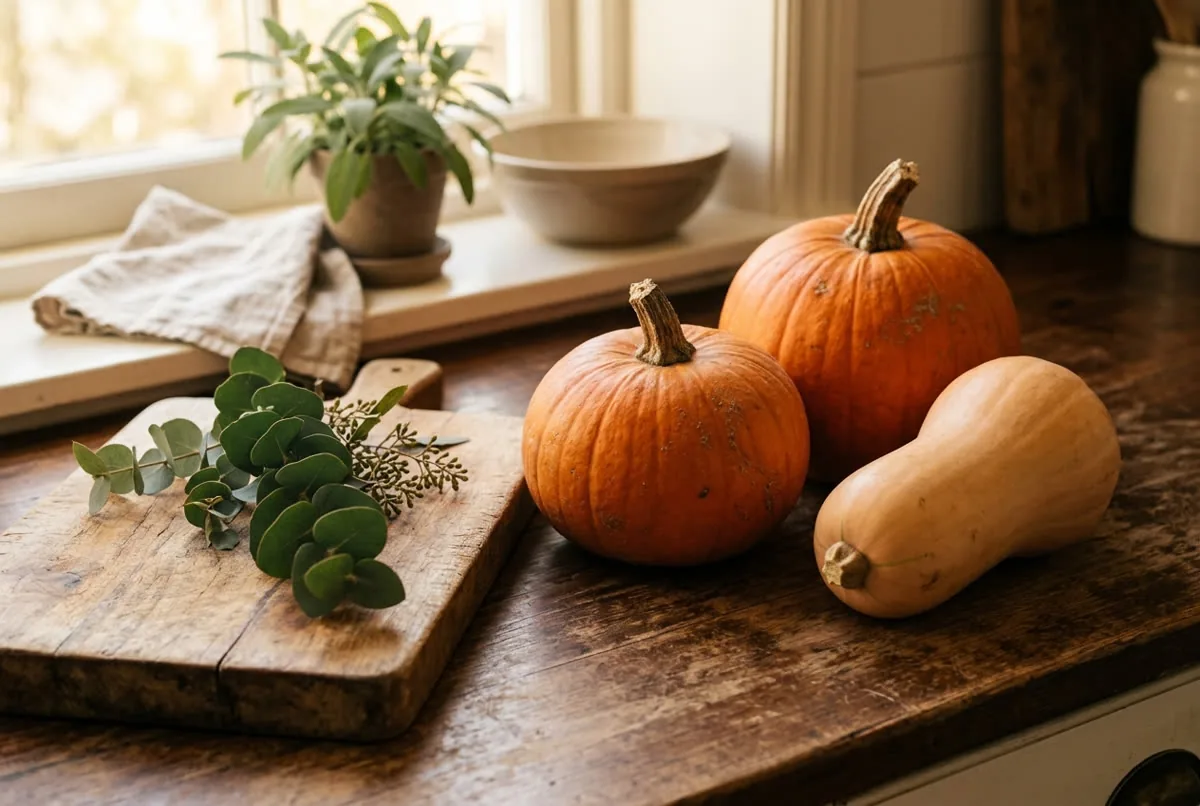
October is when pumpkin stops being a food and turns into a flavor. It shows up in a latte, a candle, a cereal box, and a cookie, and somewhere in all of that the actual vegetable disappears. Meanwhile the produce bins fill with butternut, acorn, delicata, and spaghetti squash, most of it cheap and a lot of it unbought, because nobody is quite sure what to do with it beyond soup.
That is a small shame, because pumpkin and winter squash are one of the genuinely useful parts of fall eating, for one specific reason: fiber. Not seasonal wellness in the abstract. Fiber per calorie, in a form that is sweet, cheap, and easy to keep on a shelf. Most fall roundups give squash a single line and move on to apples. This one stays on the squash, because after 40 fiber is one of the few nutrition targets that is both measurable and almost universally missed.
This article is for information only and is not medical advice. Talk to your healthcare provider before changing your diet or exercise routine, especially if you have a medical condition or take medication.
Why fiber is the number worth watching after 40
Most women are not hitting the fiber target, and the gap is not a rounding error (MedlinePlus).
Two official numbers describe that target, and they sit close enough together that you can use either one. The Institute of Medicine’s Dietary Reference Intakes set an Adequate Intake of 25 grams of fiber a day for women 19 to 50 (MedlinePlus). The FDA uses 28 grams as the Daily Value on Nutrition Facts labels (FDA). That 28 is the number behind every fiber percentage printed on a label.
Now the gap. On average, Americans eat only about 16 grams of fiber a day, well under either number (MedlinePlus).
Fiber earns that attention for mechanical reasons, not fashionable ones. It slows how quickly food leaves your stomach, adds bulk, and keeps things moving. Hold on to that first job, because it is why fiber turns up again two sections down.
There is also a practical reason fiber slips after 40 in particular. When you start paying attention to protein, and most sensible advice for this age group says you should, fiber-rich foods are often what gets crowded off the plate to make room. They are not competitors. Our guide to how much protein women over 40 actually need covers that side of the plate; this article covers the other.
What makes pumpkin and squash different from the rest of the fall produce aisle
They deliver a lot of fiber for very few calories, in a volume you can actually see on the plate.
Start with canned pumpkin, since it is the one most people already own. USDA FoodData Central puts one cup of plain canned pumpkin at about 83 calories and 7.1 grams of fiber (USDA FoodData Central). That cup also carries more than twice the Daily Value for vitamin A and about 10% of the Daily Value for potassium.
Seven grams from one cup is roughly a quarter of a day’s target, from a food that needs no cooking and keeps in a cupboard until spring.
Butternut is close behind. A cup of cooked, cubed butternut squash runs about 82 calories with about 6.6 grams of fiber, according to USDA FoodData Central. That is a portion you can build a plate around rather than sprinkle on the side of one.
Water is the other advantage. Winter squash is mostly water, which is why a cup of it fills a bowl while a cup of dry grain fills a scoop. Volume matters when you want dinner to look like dinner.
For the wider seasonal picture, apples, oats, eggs, beans, and everything else, our roundup of fall foods for steady energy after 40 covers the whole aisle. This article stays on one shelf of it on purpose.
The blood-sugar part, told honestly
Fiber and whole-food carbohydrates slow digestion, which blunts the sharpness of a blood-sugar rise. That is a mechanism, not a treatment, and the difference matters.
Here is the plain version. Carbohydrate that arrives wrapped in fiber and water breaks down more gradually than carbohydrate stripped of both. Squash arrives wrapped. A slice of pumpkin bread does not, whatever the packaging says about pumpkin being in there.
Now the confusing number you will run into. Pumpkin is frequently listed online with a high glycemic index, and that figure gets passed around as though pumpkin were a problem food. What goes unsaid is the glycemic load, which accounts for how much carbohydrate a realistic serving actually contains. Pumpkin is mostly water, so a normal portion carries very little carbohydrate, and the glycemic load lands very low. A high index attached to a tiny amount of carbohydrate is a confusing pair of numbers, not a warning. We flag it so the next alarming graphic does not throw you.
None of this is personal medical guidance. It is general nutrition information about how food behaves. If you are managing diabetes or prediabetes, or taking any medication that affects blood sugar, talk to your clinician about how squash fits your situation. That conversation is not a formality, and this article is not a substitute for it.
Five swaps that actually work in October
Swaps beat additions. Adding a squash side to the plate you were already eating is fine, but replacing something starchy with squash is where the numbers actually move.
1. Stir canned pumpkin into oats or a smoothie
The easiest one, and the one most likely to stick. Half a cup of plain canned pumpkin disappears into a pot of oatmeal or a blender jar, adding fiber and body without much flavor of its own. Plain pumpkin is not sweet, so cinnamon, vanilla, and a small amount of maple do that work.
Pumpkin brings fiber but almost no protein or fat, which makes a pumpkin bowl a snack rather than a meal. Two add-ins fix it: a scoop of protein powder blended in or stirred through after cooking, and a tablespoon of chia seeds. The chia thickens as it sits, handy if you build the bowl the night before. If you keep both seeds and never remember which to reach for, our comparison of chia seeds versus ground flaxseed for smoothies sorts it out.
2. Put butternut where the potato was
Cubed butternut behaves almost exactly like potato in a roast, a hash, a mash, or a sheet-pan dinner. It cooks in about the same time, takes the same seasoning, and browns at the edges the same way. The trade is about 6.6 grams of fiber per cooked cup, per USDA FoodData Central, in place of a starchier base.
Peeling a whole butternut is the only genuinely annoying part, and pre-cubed bags exist for exactly that reason. October is peak season, so both forms are easy to find.
3. Spaghetti squash under the sauce instead of pasta
This is the swap people assume is the fiber winner, and it is not. A cup of cooked spaghetti squash carries about 2.2 grams of fiber, per USDA FoodData Central, the lowest figure on this page.
Its real advantage sits elsewhere. That same cup is about 42 calories with about 10 grams of carbohydrate, against roughly 200 to 240 calories and about 38 to 47 grams of carbohydrate in a cup of cooked enriched spaghetti, depending on how loosely it is packed, also per USDA FoodData Central. So the swap buys volume for a fraction of the carbohydrate load. It does not buy you much fiber. And pasta is not a villain, so use this on the nights you want volume, not as penance.
4. Fold roasted squash into chili or soup
Roasted butternut or pumpkin chunks vanish into a chili and quietly improve it. They thicken the pot, add a faint sweetness that plays well against cumin and chili powder, and carry fiber into a bowl that already has plenty from the beans. Canned pumpkin works too, half a cup stirred in near the end, where it reads as body rather than as pumpkin.
Our roundup of high-protein fall soups and chili for women over 40 has the bowls these fold into, most of them built to be doubled and frozen.
5. Roast acorn squash halves as a built-in bowl
Halve an acorn squash, scoop the seeds, rub the cut sides with oil and salt, and roast face down until a knife slides in easily. What comes out of the oven is a container made of vegetable.
Fill it with whatever the fridge holds: leftover chili, ground turkey and onions, a grain and bean mix, cottage cheese and black pepper. One pan, no plating skill, and you eat the bowl.
Buying and storing them in October
Read the can twice. Plain pumpkin puree and pumpkin pie filling sit inches apart in near-identical cans, and they are not the same product. Pie filling arrives with added sugar and spices mixed in. Plain pumpkin has one ingredient. If sugar shows up on the ingredient list, you are holding the pie filling.
Canned plain pumpkin is not a lesser choice than fresh. The USDA figures above describe canned pumpkin, and it needs no knife work and stores on a shelf. Roasting a fresh sugar pumpkin is a nice project, but you are not missing fiber by using the can.
Whole squash is one of the few groceries that does not need refrigeration. An uncut butternut, acorn, or spaghetti squash keeps for weeks in a cool, dry spot with some air around it. Buy two or three in October and dinner options sit on your counter into November. Choose ones that feel heavy for their size, with hard, unblemished skin and a dry stem attached. Once you cut one open, wrap it, refrigerate it, and use it within a few days.
Go slower than you think with fiber
Add one swap at a time. Make all five changes in the same week and your digestive system will have opinions about it.
A sudden jump in fiber commonly brings gas, bloating, and general discomfort (MedlinePlus), and that discomfort is the most reliable way to talk yourself out of the whole idea by Thursday. Give each change a week or so before you stack the next one on top.
Drink more water than you think you need while you do it (MedlinePlus). Fiber works partly by holding on to water, so more fiber on the same fluids can leave you feeling worse instead of better. Spreading it across breakfast, lunch, and dinner also sits better than loading one enormous evening bowl. If something does not agree with you, that is information, not a failure of willpower.
What we are not telling you
Pumpkin and squash are not a weight-loss mechanism. They are vegetables with good fiber-per-calorie math, which can make a plate more filling, and that is the whole claim. No vegetable resets a metabolism, and there is nothing inside a squash that overrides the rest of what you eat.
Swapping one ingredient does not carry an entire eating pattern either. Spaghetti squash under a heavy cream sauce is still a heavy cream sauce. Pumpkin stirred into sweetened cereal is still mostly sweetened cereal. These swaps work as small structural upgrades inside a reasonable week, not as a patch applied to an unreasonable one.
We are also not going to pretend the fiber number alone predicts how you feel. Sleep, stress, movement, protein, and simply eating on some kind of schedule all matter, often more than any single nutrient. Fiber is just an unusually easy target to hit once you know where it hides.
If what you want is structure rather than one more list of ideas, that is a fair thing to want, and it is a different decision with a price attached. Our honest review of the popular 21-day smoothie program lays out plainly what a done-for-you plan can and cannot do, worth reading before you spend anything on one.
The honest bottom line
Pumpkin and winter squash earn their October reputation for one unglamorous reason: real fiber at a low calorie cost, in portions big enough to feel like food. About 7 grams in a cup of canned pumpkin and about 6.6 in a cup of cooked butternut are numbers worth building a week around, with the daily target in the mid-to-high twenties and most women under it.
Pick one swap this week. Stir the pumpkin into your oats, or roast butternut instead of potatoes, and let the other four wait until the first one is automatic. For more simple, protein-first ideas that keep working past pumpkin season, our Smoothies & Simple Meal Prep section is where the rest of them live.
Sources & references
Before you go
The 7-Day Protein-First Meal Plan for Women Over 40
A complete protein-first week, finished for you: your personal protein target, a one-page shopping list, 21 recipes at 25-35 g protein each, and a timed 90-minute prep schedule. Printable PDF, paired with a free 7-lesson email course.
Free guide
The 7-Day Protein-First Meal Plan for Women Over 40
A complete protein-first week, finished for you: your personal protein target, a one-page shopping list, 21 recipes at 25-35 g protein each, and a timed 90-minute prep schedule. Printable PDF, paired with a free 7-lesson email course.