You’ve probably seen it everywhere this year: Zone 2 this, Zone 2 that, usually paired with a claim that slow, easy cardio is somehow more powerful for your hormones than a hard sweaty workout. It sounds suspicious, like wellness marketing wearing a lab coat. Isn’t this just walking slowly with extra steps?
Mostly, yes. And that is not an insult. Here is the honest version: Zone 2 is a real, well-established training concept from endurance sports, it is genuinely well suited to a body juggling perimenopause, stress, and a full calendar, and a walking pad happens to be one of the easiest ways to actually hold it, because it controls the one thing outdoor walks cannot: your pace. This article will not promise you a hormone reset. It will give you the method, so you can decide for yourself whether the pace matches the hype.
This article is for information only and is not medical advice. Talk to your healthcare provider before starting a new exercise routine, especially if you have a heart condition, joint issues, or take medication.
What Zone 2 actually means
Exercise scientists split effort into rough heart-rate zones, and Zone 2 sits in the easy-but-not-lazy middle: commonly described as roughly 60 to 70 percent of an estimated maximum heart rate (Cleveland Clinic). In plain terms, it is the pace where you are working, your breathing is a little elevated, and you could still chat through the whole thing without gasping between sentences (CDC).
That last part, the conversational test, is the only tool most people actually need. You do not have to own a heart-rate strap to train Zone 2. You need a pace you can sustain and still talk through, held consistently instead of by feel alone, which is exactly the part outdoor walks make hard. Wind, hills, traffic lights, and other people’s dogs all nudge your effort up and down without asking. A walking pad removes every one of those variables. Set a speed, and if your pad has incline, add a little slope, and the effort stays put until you decide to change it.
If you want a number instead of a feeling, a commonly used formula estimates maximum heart rate as roughly 220 minus your age, with Zone 2 landing around 60 to 70 percent of that figure (Cleveland Clinic). Treat it as a rough starting estimate, not a diagnosis. Real fitness, medication, and genetics all shift the true number, sometimes by a lot, so the talk test remains the more reliable everyday check.
The honest hormone story
Here is where the hype gets ahead of the evidence. The claim making the rounds is that Zone 2 cardio is uniquely “hormone-friendly,” gentler on cortisol, kinder to a stressed nervous system, better for a body already managing perimenopause than harder interval training. The honest answer is that solid human research specific to Zone 2 training and hormones in midlife women is still thin on the ground, and no walking method treats, prevents, or corrects a hormone condition. If you are noticing real symptoms, that conversation belongs with your doctor, not a walking pad review.
What is fair to say is more modest, and arguably more useful. Hard, high-intensity training is itself a physical stressor, and stacking it on top of a season that is already short on sleep and long on stress can leave some people feeling more depleted rather than less, which our honest look at cortisol and belly fat after 40 covers in more depth. An easy, sustainable pace asks less of a taxed system while still counting as real movement. The bigger factor, though, is probably the most boring one in fitness: a pace gentle enough to repeat daily gets repeated, and consistency is doing more of the real work than any specific heart-rate number. If Zone 2 helps you actually show up most days instead of dreading a hard session, that consistency is the genuine win, hormones or not.
The 4-week Zone 2 build
Ramp the one variable that matters, time, before you touch speed or incline. Repeat any week that still feels effortful before moving on; the calendar is a guide, not a deadline.
| Week | Sessions | Duration | Effort |
|---|---|---|---|
| 1 | 3 | 15 min | Slower than feels productive. Full sentences, easily |
| 2 | 4 | 20 min | Same pace, just longer. Resist speeding up |
| 3 | 4 | 25 min | Add a gentle incline instead of speed, if your pad has one |
| 4 | 5 | 30 min | Your new normal pace and duration |
Two things make this build work. First, the pace itself barely changes across four weeks, only the time does, because Zone 2 training improves your cardio base by accumulating minutes at a steady effort, not by grinding harder each week. Second, if you have an incline setting, use it instead of speed once duration feels easy. A modest slope raises the work your legs and heart are doing while keeping your pace, and your joints, exactly where they were. It is the same logic behind the popular 12-3-30 format, just eased in gradually instead of attempted on day one.
Setting your walking pad up for Zone 2
A few small choices make holding the zone much easier:
- Pick a speed you could hold for an hour, even if the session is shorter. If you would need a finish line to survive it, it is too fast for Zone 2.
- Use incline before speed once you want more challenge. A manual incline you can nudge up in small steps, without touching your pace, keeps you in the zone longer.
- Save the talk test for check-ins, not constant monitoring. Try a sentence out loud every 5 to 10 minutes. If you cannot finish it easily, ease off.
- Pair it with something that occupies your mind, not your legs. Podcasts, calls, and shows all work well at Zone 2 pace, which is part of why it is easier to sustain than a harder session demanding your full attention.
If you are shopping for a pad with this method in mind, our best walking pad guide for women over 40 breaks down why manual incline and a stable, easy-to-nudge speed control matter more here than a flashy top speed, and explains our pick of the UREVO Strol 2E Pro, which has a manual incline of up to 12%, for exactly that reason (UREVO).
Who this method suits (and who should skip it)
Zone 2 on a walking pad fits especially well if your week is already stretched thin and a hard workout is one more thing you have to talk yourself into. It also suits anyone who has tried faster interval-style cardio and found it left them wiped out rather than energized, or whose joints prefer a steady, predictable surface over pavement cracks and curbs.
It is a poor fit if you are training for an event with a real speed or distance goal, where higher-intensity work earns a genuine place in the plan, or if you are hoping a heart-rate number alone will fix a symptom that needs medical attention. Zone 2 is a training method, not a diagnosis or a treatment, and it works best as one honest piece of a broader routine rather than the whole answer.
Common mistakes that push you out of the zone
Treating “moderate” as the goal. Zone 2 feels almost too easy at first, and the instinct is to speed up until it feels like real exercise. That instinct is exactly what takes you out of the zone. Trust the talk test over the feeling that you should be working harder.
Chasing a precise heart-rate number. Formulas are estimates, not lab measurements, and obsessing over one or two beats per minute misses the point. The zone is a range, and the talk test will tell you more than a monitor arguing with itself over a few beats.
Skipping the warm-up. Jumping straight to your target pace pushes your heart rate up faster than your body is ready for, which can overshoot the zone before you notice. Five easy minutes first solves it.
Doing it once and calling the week done. A single 30-minute session tells you almost nothing about your fitness trend. Zone 2’s real benefit shows up in the accumulated minutes across a week and a month, which is exactly why the build above adds sessions before it adds intensity.
Making it your only cardio and your only strength. Zone 2 builds a steady cardio base, but it does not load your muscles the way resistance work does, and muscle is the quiet story of metabolism after 40; our plain-English guide to what actually changes in your metabolism after 40 explains why that pairing matters. Two short strength sessions a week alongside your Zone 2 walks cover more ground than either alone (CDC).
Expecting a fast, dramatic change. Zone 2 training is a slow-burn cardio base builder, not a rapid transformation tool, and it is not a substitute for medical care if something feels genuinely off. Judge the month by whether your resting effort feels easier and whether you actually kept the habit, not by the scale.
If you’d rather follow a plan than build one
This article gives you the method, but some weeks call for less thinking, not more. If you want the printable version of the 4-week build with space to log your pace and minutes, it comes with the free newsletter signup below, alongside our other walking tools.
Zone 2 only covers the cardio half of a midlife routine, though. If you would rather follow a done-for-you strength framework than piece one together yourself, our review of Old School New Body covers whether its short, F4X-style resistance sessions are worth pairing with your walks. And if a slower, time-based plan feels better suited to outdoor walks than a machine, our 30-day walking plan for women over 40 takes the same easy-pace philosophy outside; our walking pad habit-stacking routine is the better fit if fitting any walk in at all is still the harder problem than pacing it. You’ll find the rest of our low-impact routines in Gentle Workouts & Strength.
Gear, briefly
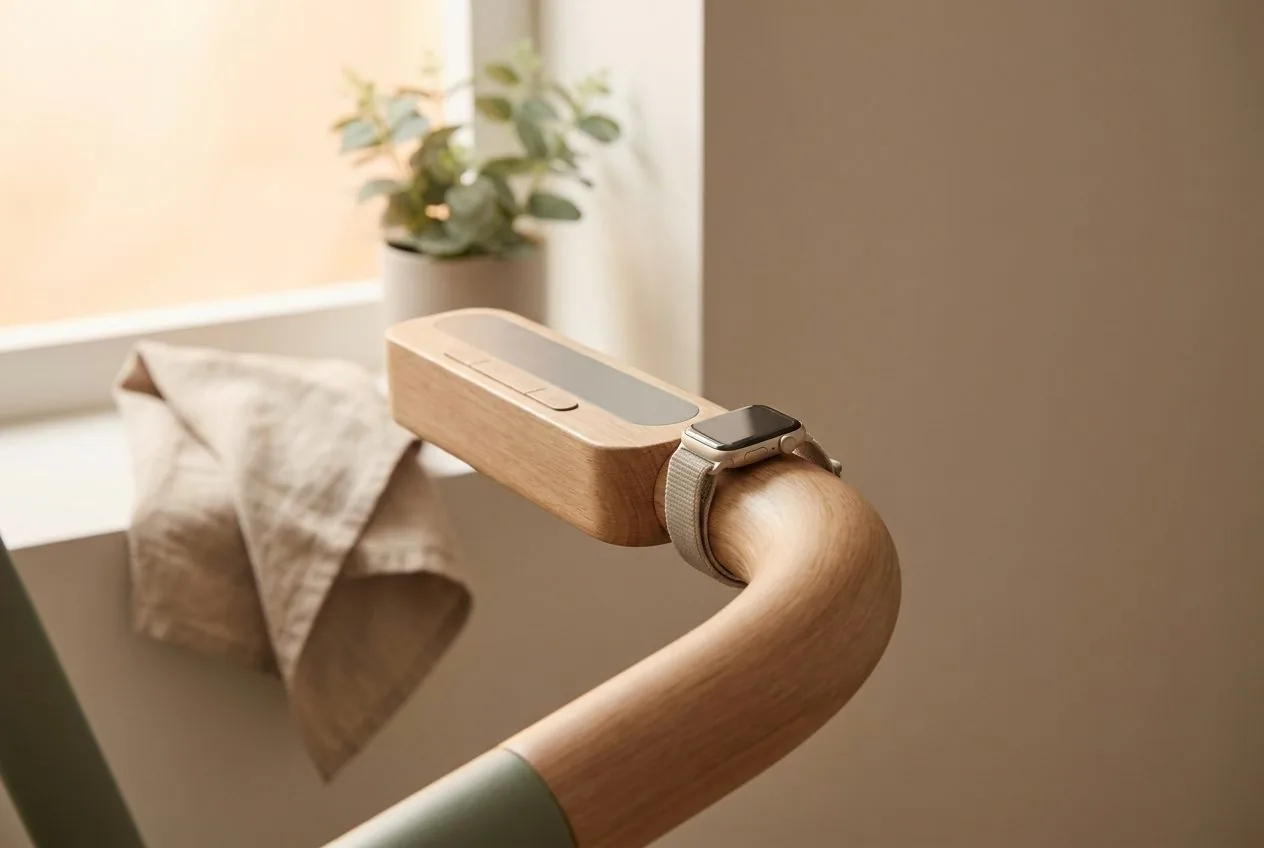
The one non-negotiable piece of gear is a walking pad with a speed control fine enough to hold an easy, steady pace and, ideally, a manual incline you can nudge up without touching speed. A wrist fitness tracker or chest strap is optional. It can help you catch pace drift on longer sessions once you have stopped paying close attention, but it adds convenience, not accuracy your body cannot already tell you through the talk test.
Start this week with 15 minutes at a pace slower than you think counts. That is the entire assignment. The zone rewards patience, not effort, and four weeks from now, today’s pace will feel like a warm-up.
Frequently Asked Questions
- What is Zone 2 cardio, exactly?
- Zone 2 is a heart-rate range commonly described as roughly 60 to 70 percent of an estimated maximum heart rate, or more simply, a pace easy enough to hold a full conversation. It sits below the huffing, can't-finish-a-sentence effort of a brisk interval and above a full stroll. The appeal is that it is sustainable for longer stretches, which is exactly what a walking pad is built for.
- How do I find my Zone 2 heart rate without a lab test?
- The simplest method is the talk test: if you can speak in full sentences without pausing for breath, you are likely in range. If you want a number, a commonly used formula is 220 minus your age for an estimated max, with Zone 2 landing around 60 to 70 percent of that figure. Treat any formula as a rough starting point, not a precise measurement, since real fitness and genetics vary the true number by a fair amount.
- Do I need a heart rate monitor for Zone 2 training?
- No, and many people train Zone 2 for months using only the talk test. A wrist tracker or chest strap can make it easier to catch pace drift on longer sessions, especially once you are moving to a podcast or a show instead of paying close attention, but it is a nice-to-have rather than a requirement. Start with the talk test and add a monitor later if you want more precision.
- Does Zone 2 cardio really help with hormones or cortisol after 40?
- The honest answer is that the human evidence specific to Zone 2 training and hormones in midlife women is still thin, and no walking method treats, prevents, or fixes a hormone condition. What is reasonable to say is that gentle, sustainable cardio is itself less of a stressor on the body than repeated hard, high-intensity sessions, and many women find an easier pace fits more consistently into a stressed, busy season of life. Consistency, not the heart-rate number, is likely doing most of the real work. Results vary from person to person, and persistent symptoms deserve a real conversation with your doctor, not a walking plan.
- How is Zone 2 different from just walking?
- Every Zone 2 session is a walk, but not every walk is Zone 2. A stroll to the mailbox or a fast power-walk with a friend can both sit outside the range, one too easy to build cardio fitness, one too hard to sustain for long. Zone 2 simply names a specific, checkable effort level in the middle, which makes it easier to be consistent about instead of guessing at 'moderate' each time.
- Can I do Zone 2 cardio every day?
- For most healthy adults, yes, that is actually the point of the zone: it is gentle enough to repeat daily without needing much recovery, unlike hard interval sessions. Start with what is realistic for your week rather than a daily streak you cannot sustain, and build from there. If you have a heart condition, joint issues, or any concern about starting a new exercise habit, check with your provider first.
- Is Zone 2 cardio on a walking pad enough exercise by itself?
- It builds a genuinely useful cardio base, but it is not a complete routine on its own. Zone 2 sessions do little to load or protect your muscle, and muscle is a big part of the metabolism story after 40. Pairing your walks with two short strength sessions a week covers the ground that cardio alone cannot, and neither piece needs to be intense to count.
Sources & references
Before you go
The 7-Day Protein-First Meal Plan for Women Over 40
A complete protein-first week, finished for you: your personal protein target, a one-page shopping list, 21 recipes at 25-35 g protein each, and a timed 90-minute prep schedule. Printable PDF, paired with a free 7-lesson email course.
Free guide
The 7-Day Protein-First Meal Plan for Women Over 40
A complete protein-first week, finished for you: your personal protein target, a one-page shopping list, 21 recipes at 25-35 g protein each, and a timed 90-minute prep schedule. Printable PDF, paired with a free 7-lesson email course.