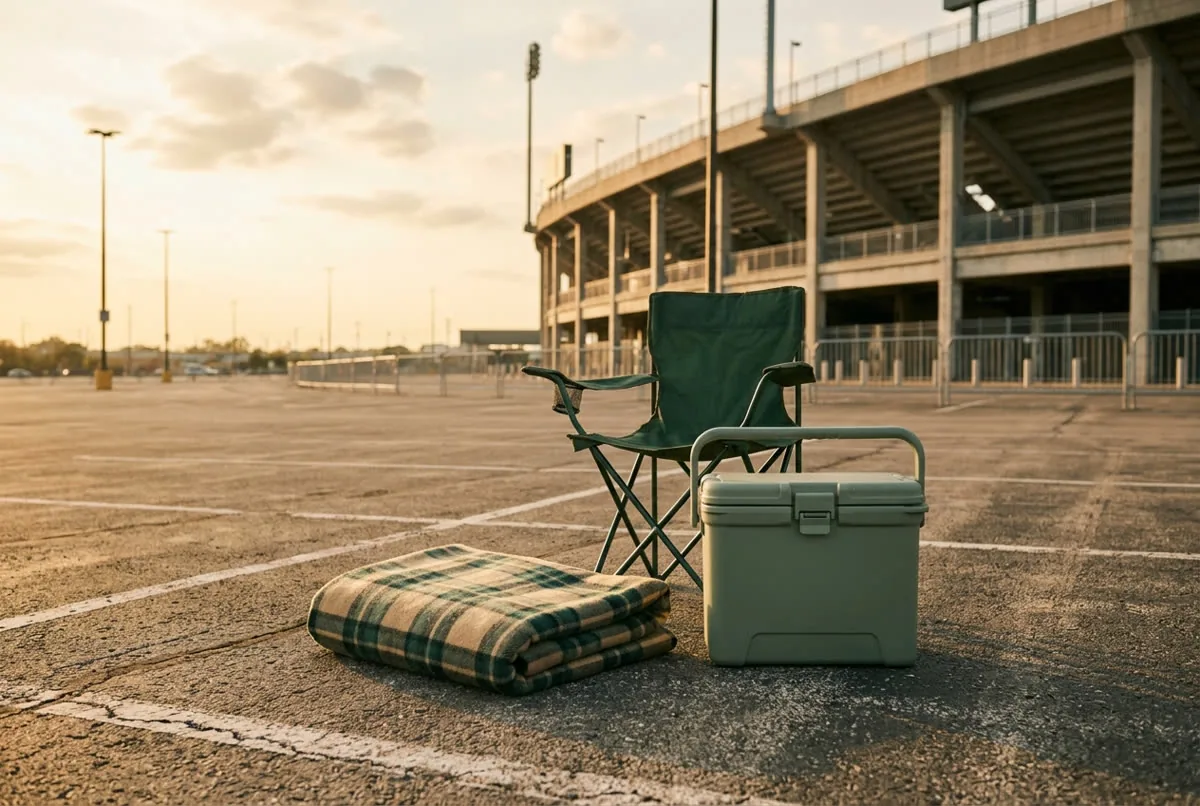
College football’s Week 1 lands September 3 through 7 this year, and NFL Kickoff follows just two days later on September 9 (NFL.com, 2026). That means tailgate lots and stadium concourses are about to fill up again, and if last season is any guide, you already know what an 8-plus hour game day does to your legs, feet, and lower back. By the fourth quarter your calves ache, your feet feel swollen in your shoes, and sitting down at last feels like relief you had to earn. Multiply that by a full season of Saturdays and Sundays and the ache stops being a one-off and starts being something you plan your whole weekend around.
The short answer: The soreness and swelling from a full day on your feet is not something you just have to tough out. Strengthening the calf muscles that pump blood back up your legs, planning real sit-down breaks, and choosing supportive footwear all target the causes of standing fatigue, and the season just started, so you have months of Saturdays and Sundays ahead to build the strength piece in.
Why This Football Season Is a Real Standing-Endurance Test
The 2026 college football season opens with a full Week 1 slate, including the first full Saturday of games on September 5 (FBSchedules.com, 2026). The NFL adds its own kickoff two days later, with the Seattle Seahawks hosting the New England Patriots at Lumen Field on Wednesday, September 9 (NFL.com, 2026). For anyone who tailgates, works a concession stand, ushers, or simply commits to a full slate of games with friends, that is back-to-back weekends of hours spent upright on pavement, bleacher steps, or a stadium concourse. It is a different kind of demand than a Halloween party or a single evening out. It is a whole season of it.
What Actually Happens to Your Legs After Hours of Standing
Standing for more than eight hours at a stretch does something specific to your circulation. Without enough movement in the calf muscles, the “muscle pump” that normally pushes blood back up toward the heart slows down, and blood starts pooling in the lower legs. That pooling is what shows up as swelling, heaviness, and pain by the end of a long day. A crossover trial of 39 workers who stood for prolonged periods found that wearing medical compression stockings during work prevented the significant increase in leg volume that untreated standing caused (PMC, 2022).
The same trial looked at what happened after the standing was over. Leg pain scores dropped the most, by 1.9 points on a standard pain scale, when people combined rest with intermittent pneumatic compression after a long shift. But even simple rest on its own, 60 minutes lying down, partially eased pain (PMC, 2022). In other words, the fix does not require special equipment. Getting off your feet for an hour after a long stretch of standing does real, measurable work.
You Do Not Have to Just Push Through It
It is easy to assume that sore, swollen legs by the end of a game day are simply the cost of showing up and having fun, something every tailgater deals with and nobody really fixes. The research above says otherwise. Targeted interventions, from compression to planned rest, produced measurable reductions in pain and swelling in people who stand for hours at a stretch (PMC, 2022). That distinction matters, because it means the ache you feel by the fourth quarter is not a fixed cost of the day. It is a signal that your calf muscles are not yet doing the pumping work they need to do, and that is trainable, not something you have to accept as part of the deal every single season.
Do Compression Socks Actually Help, or Is It Marketing?
This is one of the most common questions going into tailgate season, and it is a fair one given how much compression gear gets marketed as a cure-all. Here is what the research actually supports: the trial above did not recruit patients with diagnosed vein disease. It studied workers who stood more than 8 hours a day and had everyday leg pain and swelling, and it still found a measurable difference in leg swelling between those who wore compression stockings and those who did not (PMC, 2022). So no, this is not only a tool for people with a medical circulation diagnosis. For an ordinary long day on your feet, compression socks have real evidence behind reducing the leg-volume increase that causes that end-of-day heaviness. They are not magic, and they will not replace the strength piece below, but they are not just marketing either.
The Strength Moves That Actually Build Standing Endurance
If compression and rest breaks manage the symptoms, strength is what changes your baseline. Calf raises are a natural fit for this exact problem, because they directly train the muscles responsible for pumping blood back up your legs while you stand, and the trial above traces standing-related swelling to insufficient calf muscle pumping (PMC, 2022). Footwear with arch support and cushioning and a small heel adds to that over a long day (CCOHS).
You do not need a gym for this. A basic calf-raise progression looks like:
Bodyweight Calf Raises
Stand holding a counter or chair back for balance. Rise up onto your toes, pause for a second at the top, then lower slowly. Start with two sets of 12 to 15 reps.
Single-Leg Calf Raises
Once bodyweight raises feel easy, shift most of your weight onto one leg at a time. This builds the kind of one-sided stability you actually use when shifting your weight during hours of standing.
Sit-to-Stands
From a sturdy chair, stand up without using your hands, then sit back down with control. This trains the hips and thighs that share the load with your calves over a long day, and it doubles as the kind of functional strength the CDC points to.
Federal guidance recommends muscle-strengthening activity on at least two days a week that targets the major muscle groups, including the legs and hips (CDC, reviewed 2023-12-06). Two short sessions a week, built around moves like these, meets that minimum. For a more complete lower-body routine you can build around this, our guide to ankle weight moves for steady legs walks through added-resistance progressions once bodyweight raises feel too easy.
Footwear and Small Adjustments That Add Up
Strength is the piece that changes what your legs can handle, but what you put on your feet still matters on the day itself. Occupational safety guidance for people who stand at work advises against shoes that lack arch support or cushioning and against very high heels, noting that a small heel can decrease strain on the Achilles tendon and make standing more comfortable (CCOHS). Save the flat sandals or the shoes you have not broken in yet for another day. Whatever you already own that has real cushioning and a stable, low heel is the better call for a full game day, and it costs nothing to just choose it out of your existing closet.
Should You Take Sit-Down Breaks During the Game?
Yes, and the timing matters more than most people assume. The same trial that measured leg pain after prolonged standing found that rest alone, without any compression device, partially improved pain after 60 minutes of lying down (PMC, 2022). That is a strong argument for planning a real seated break, not just a five-minute perch on a cooler, at halftime or between tailgate activities. If you know you are committing to a full slate of Saturday games this season, building in one deliberate 30 to 60 minute seated stretch partway through the day is not being soft about it. It is the closest practical version of the rest the research measured.
Halftime Reset: Stretches to Loosen Tired Legs
Along with sitting down, a few minutes of gentle movement at halftime helps reset tired legs before the second half. Simple ankle circles, calf stretches against a wall or step, and a few slow marching steps in place all encourage the same blood flow that calf raises train over time. None of this replaces the strength work above, but paired with a real seated break, it is a low-effort way to keep your legs from stiffening up between the first and second half.
If balance and steady footing on uneven tailgate lots or bleacher steps is part of what worries you, it is worth building that into your prep too. Our review of a balance trainer for steady footing after 40 covers a tool built specifically for that kind of stability work, which pairs naturally with the calf-raise progression above.
Putting It Together Before Week 1
You have a real, dated reason to start now rather than waiting: Week 1 college games began September 3 and NFL Kickoff followed on September 9, which means every remaining weekend of the season is a chance to test the plan. Two short sessions a week at the federally recommended pace, running through calf raises and sit-to-stands, meets the federal minimum for muscle strengthening (CDC, reviewed 2023-12-06). A simple version of that plan looks like: two sets of bodyweight calf raises and one set of sit-to-stands early in the week, then single-leg calf raises and a repeat of sit-to-stands a few days later, twice before kickoff weekend and continuing through the season from there.
Pair that strength work with a planned seated break during the day and supportive footwear, and you are covering the pieces the standing-fatigue research and occupational safety guidance point to, not a guess. Start with the bodyweight progression above this week, and build from there as the season goes on.
Frequently Asked Questions
- Do compression socks actually help with standing fatigue, or is it just marketing?
- A crossover trial of 39 long-standing workers found that wearing medical compression stockings during work prevented the significant leg-volume increase that untreated standing caused, and the study looked at workers with everyday leg pain and swelling from standing, not patients recruited for a diagnosed vein disease (BMC Musculoskeletal Disorders, 2022).
- What can I do ahead of time so my legs and back do not hurt after standing all day at a tailgate?
- Calf raises train the calf muscles whose pumping action moves blood back up your legs, the pumping that falls short during prolonged standing. Occupational safety guidance also recommends shoes with arch support and cushioning and a small heel rather than a very high one.
- What exercises build the kind of leg endurance needed for a full game day?
- Calf raises directly train the calf muscle pump, and federal guidance recommends muscle-strengthening activity at least two days a week targeting major muscle groups including the legs and hips (CDC, reviewed 2023-12-06).
- Should I take breaks sitting down during a tailgate, and how often?
- Yes. In the same clinical trial, rest alone, without any compression device, partially improved leg pain after 60 minutes of lying down following prolonged standing, so a planned break off your feet partway through the day does real work (BMC Musculoskeletal Disorders, 2022).
Sources & references
- FBSchedules.com, 2026 college football Week 1 schedule (opens in new tab)
- NFL.com, 2026 Week 1 schedule (opens in new tab)
- BMC Musculoskeletal Disorders, Compression for leg edema after prolonged standing (opens in new tab)
- CDC, What counts as physical activity for adults (opens in new tab)
- CCOHS, Working in a standing position (opens in new tab)
Before you go
The 7-Day Protein-First Meal Plan for Women Over 40
A complete protein-first week, finished for you: your personal protein target, a one-page shopping list, 21 recipes at 25-35 g protein each, and a timed 90-minute prep schedule. Printable PDF, paired with a free 7-lesson email course.
Free guide
The 7-Day Protein-First Meal Plan for Women Over 40
A complete protein-first week, finished for you: your personal protein target, a one-page shopping list, 21 recipes at 25-35 g protein each, and a timed 90-minute prep schedule. Printable PDF, paired with a free 7-lesson email course.