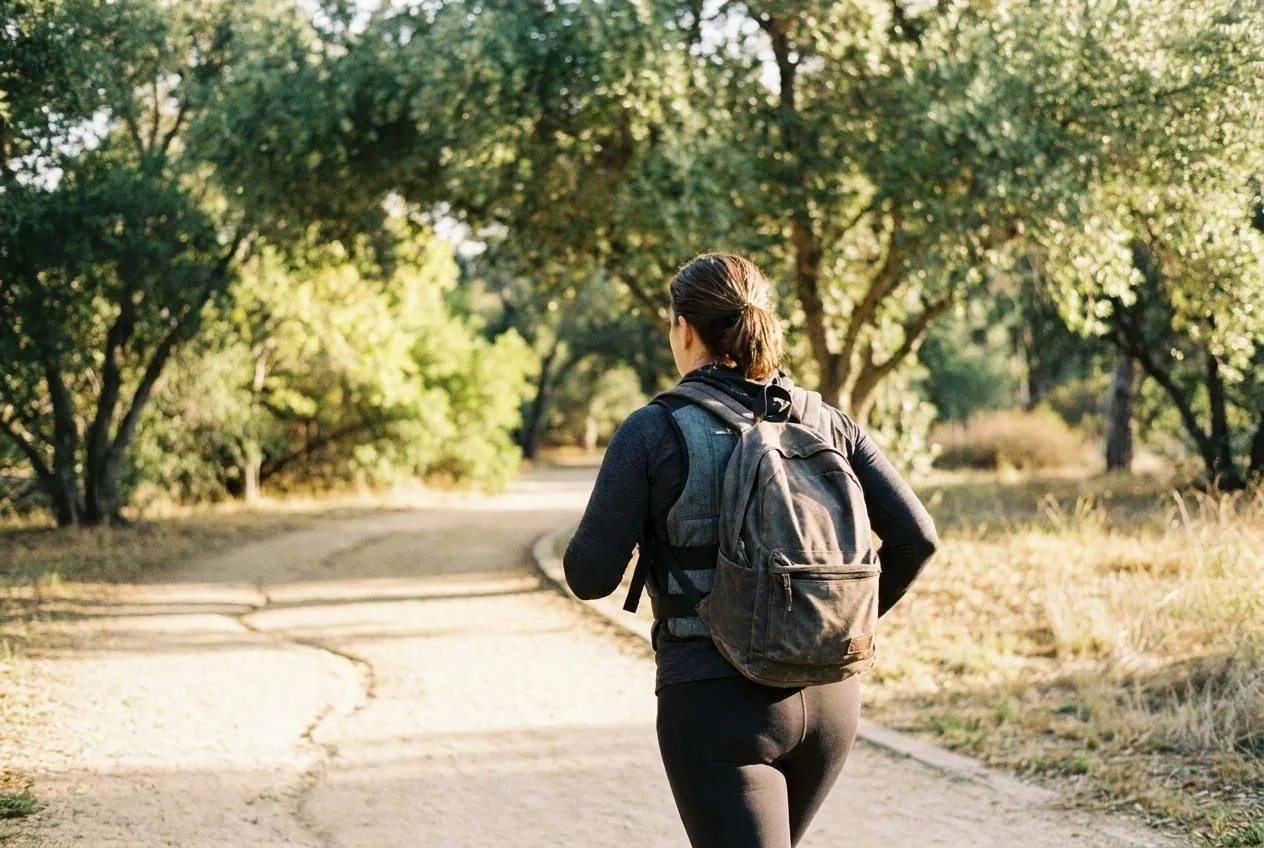
If your feed has quietly filled up with women your age walking around in weighted vests over the past year, you’re not imagining the shift. What used to look like military prep or CrossFit box gear has turned into something a lot more ordinary: a way to make an everyday walk work harder for your bones and your muscle, not a way to punish yourself into a smaller size.
That reframe matters, because it changes the whole point of the exercise. This isn’t about turning your walk into a sweatier, more exhausting cardio session. It’s about adding a modest, controlled amount of load to a habit you probably already have, because load is one of the few things your bones and muscles actually respond to as you get older. Nobody can promise you a specific bone density number or a timeline for how your body will change. What this article gives you instead is a real, cautious method: how to start, how much weight to use, and how to avoid turning a good idea into a sore back.
Part of why this has caught on with women in their 40s and 50s specifically is that it doesn’t ask you to become a different kind of exerciser. You don’t need to learn a lift, join a class, or clear a chunk of your evening. You keep the walk you already do or want to start, and you make it count for a little more. That’s a much easier habit to keep than most of what gets marketed at this age group, which is a big part of the appeal.
Why bone density and muscle become the priority after 40
Two quiet changes tend to show up around this decade, and they explain why “just walk more” eventually needs an upgrade.
Bone density. As estrogen declines through perimenopause and menopause, bone turnover shifts and many women experience a period of faster bone loss (NIAMS). Weight-bearing and impact-friendly movement is one of the more promising, low-cost levers researchers point to for supporting bone health through this stretch, alongside adequate calcium, vitamin D, and protein (NIAMS). It is not a cure, and it will not undo bone loss that has already happened; it is one input among several.
Muscle mass. Starting in our 40s, most people gradually lose muscle unless they give their bodies a specific reason to keep it. Less muscle means a lower resting metabolic rate, less support around aging joints, and less strength for ordinary tasks like carrying groceries or standing up from the floor. Our plain-English explainer on what actually changes in your metabolism after 40 walks through the mechanics if you want the fuller picture.
A plain walk is wonderful for your heart, your mood, and your habit-building, but it asks relatively little of your bones or your muscles once your body adapts to the effort. Adding weight is one of the simplest ways to ask for a little more, without switching to running or jumping, both of which carry their own joint tradeoffs for a lot of midlife bodies.
This is also why rucking gets described as sitting between “just walking” and formal strength training rather than replacing either one. If you already do a couple of sessions a week with dumbbells or a kettlebell, a loaded walk is a gentle complement, not a competitor; our kettlebell basics guide covers the other side of that same muscle-preservation goal. If strength training still feels like a bigger step than you’re ready for, a weighted walk is a reasonable, lower-commitment place to start asking more of your body.
This article is for information only and is not medical advice. Talk to your healthcare provider before changing your diet or exercise routine, especially if you have a medical condition or take medication. Check with your provider first if you have joint injuries, heart conditions, dizziness, or an osteoporosis or bone density diagnosis, since a loaded walk should fit into any care plan you already have, not replace it.
What a weighted vest actually adds over a plain walk
A vest distributes extra weight across your torso, close to your spine, so a normal walking stride still feels like walking rather than hiking with a lopsided load. Three things change once that weight is on:
- More work for your postural muscles. Your core, upper back, and glutes all have to work a little harder to keep you upright and stable, which is exactly the kind of low-intensity strength stimulus those muscles rarely get from walking alone.
- More mechanical load on your skeleton. Every step transmits a bit more force through your legs, hips, and spine, which is the general mechanism behind why loaded walking is considered a weight-bearing exercise worth doing on purpose.
- The same joint-friendly pace. Unlike running, rucking doesn’t add impact by making you move faster. You keep the easy, sustainable pace that makes walking so adherence-friendly in the first place; you just carry a bit more while you do it.
The beginner rucking method
Here’s the order that keeps this safe and sustainable, not the order that gets the fastest results.
- Build a plain walking base first. Be comfortably walking 20-30 minutes, several times a week, before you add anything (Cleveland Clinic). If you don’t have that base yet, our 30-day walking plan for women over 40 is the place to start; this article is the upgrade that comes after, not instead of it.
- Get the fit right before the weight. A vest should sit snug and high, close to your center of gravity, with zero bounce when you walk. Loosen straps and it slaps around, wasting effort and irritating your shoulders long before the weight is the real problem.
- Start light and prove your form. A small amount of evenly distributed weight is plenty for week one. You’re checking that your posture stays tall and your stride stays natural, not testing your limits.
- Keep the pace easy, not breathless. You should still be able to talk in full sentences. The load does the work here; your speed doesn’t need to.
- Progress one variable at a time. Add a little more time, or a little more weight, or a little more distance, never all three in the same week. Boring, incremental progress is what lets your joints keep up with your enthusiasm.
A simple 4-week starting plan
Four weeks, two to three sessions a week, with easy unweighted walking or rest filling the other days.
| Week | Sessions | Weight | Duration |
|---|---|---|---|
| 1 | 2 | Very light, or an empty vest to check the fit | 15-20 min |
| 2 | 2-3 | Small starting weight, evenly loaded | 20 min |
| 3 | 2-3 | Same weight held steady | 25 min |
| 4 | 2-3 | A small increase only if week 3 felt easy | 25-30 min |
If any week feels harder than it should, repeat it rather than pushing forward. There’s no prize for reaching week 4 on a sore back.
Common mistakes that turn rucking into a bad idea
Loading up on day one. The vest feels manageable in the store and much heavier by minute ten of an incline. Start lighter than your instinct says (Cleveland Clinic).
Letting pace creep up. The instinct to make a “real workout” out of it often means walking faster, which turns a joint-friendly load exercise into something closer to loaded jogging. Keep the pace easy and let the weight be the entire stimulus.
Ignoring a bouncing or shifting vest. If it moves with every step, tighten it or size down. A vest that bounces isn’t training your core any harder; it’s just uncomfortable and eventually irritating to your shoulders and lower back.
Skipping rest days. Loaded walking is still added stress on your joints and connective tissue. Two or three sessions a week with recovery days between them beats a daily habit that never lets your body catch up.
Wearing it for anything with impact. A weighted vest is for walking, not for running, jumping, or high-impact classes. More weight plus more impact is exactly the combination that tends to cause overuse injuries.
Is this safe for your joints, back, or bones specifically
Added weight is added stress on every joint from your feet to your spine, so the honest answer is: probably, at a light enough weight and an easy enough pace, for most healthy adults, but it deserves a real check-in first if any of this applies to you. If you have a history of knee or hip pain, a joint replacement, ongoing back issues, or an osteoporosis or low bone density diagnosis, talk to your provider or a physical therapist about a loading plan before you buy anything or add weight to a walk (NIAMS). This is exactly the kind of decision worth making with someone who knows your specific joints and your specific bone scans, not a blog post.
The gear you actually need
Very little to start. A well-fitted vest with the weight distributed evenly (not all in one pocket), adjustable straps so it sits snug without bouncing, and shoes with real support for the extra load underfoot. If you’re not ready to buy a vest, a sturdy daypack loaded with something soft and heavy, like a couple of books wrapped in a towel, is a completely reasonable way to test whether you like loaded walking before spending money on dedicated gear.
Shoes deserve a second mention here, more than they usually get in a gear list. Extra weight means extra force through your feet and ankles with every step, so this isn’t the walk to do in worn-out sneakers you’ve been meaning to replace. A supportive, cushioned walking shoe fitted properly, and swapped out once the cushioning has flattened rather than once it looks worn, matters more once you’re carrying load than it did on an unweighted walk.
When a structured program helps more than one piece of gear
A vest solves the “add a little load to my walk” problem. It doesn’t solve the “what else should I be doing for strength” problem, and muscle is built by more than one exercise done a few times a week. If you know you do better with a full plan that tells you exactly what to do each session, our honest review of Old School New Body covers one option built around brief, joint-friendly resistance sessions that pair naturally with loaded walks like these.
Grab the printable version
If you’d like this progression as a simple checklist to keep on your phone, join our newsletter and we’ll send you our gentle-strength starter guide, plus honest reviews and protein-first recipes, no shame and no miracle promises attached.
The honest bottom line
A weighted vest will not transform your bones or your body on its own, and no honest guide should tell you otherwise. What it reliably offers is a small, controllable way to add load to a habit you likely already have, which is a sensible thing to do for your muscle as you get older and a reasonable, if still unproven, addition for your bones, since a 2025 trial found vests alone did not prevent hip bone loss during weight loss (Wake Forest University School of Medicine). Start light, fix the fit before you touch the weight, keep the pace easy, and let boring, steady progression do the real work. You’ll find more joint-friendly ways to build strength in our Gentle Workouts & Strength section.
Frequently Asked Questions
- What is rucking, and do I need special gear to try it?
- Rucking simply means walking with added weight on your back or torso. You can start with almost anything sturdy, like a daypack with books wrapped in a towel, before deciding whether a purpose-built weighted vest is worth buying. The gear matters less than starting light and building the habit.
- How much weight should a beginner use in a weighted vest?
- Cleveland Clinic suggests starting with an empty pack, or around 5 pounds, and working your way up from there rather than loading up on day one. Start at the light end if you are new to loaded walking, and only add weight once a session at your current load feels genuinely easy.
- Can a weighted vest really help with bone density after 40?
- Weight-bearing, impact-friendly exercise is one of the more promising, low-cost tools researchers point to for supporting bone health as estrogen declines around perimenopause and menopause, and adding load to a walk is a simple way to do more of it. Evidence for vests specifically is limited: a 2025 trial in older adults losing weight found that wearing a vest did not prevent hip bone loss. It is not a guaranteed fix for bone loss, it will not replace medical care or screening, and anyone with an osteoporosis diagnosis should build a loading plan with their provider rather than guessing.
- Is rucking safe if I have knee, hip, or back problems?
- It can be, at a light enough weight and an easy enough pace, but added load is added stress on every joint in the chain from your feet to your spine. If you have an existing injury, a joint replacement, or ongoing back pain, talk to your provider or a physical therapist before adding any weight to your walks.
- How often should I ruck each week?
- Two to three sessions a week, with easy unweighted walks or rest on the other days, is a sensible starting rhythm for most beginners. Your body needs recovery time to adapt to the extra load, and more is not automatically better here.
- Is a weighted vest better than just wearing a backpack?
- A well-fitted vest sits closer to your spine and distributes weight more evenly across your torso, which tends to feel more stable and cause less shoulder strain than a loaded backpack over a long walk. A backpack is a perfectly reasonable way to try the idea first before you decide whether the vest is worth buying.
Sources & references
Before you go
The 7-Day Protein-First Meal Plan for Women Over 40
A complete protein-first week, finished for you: your personal protein target, a one-page shopping list, 21 recipes at 25-35 g protein each, and a timed 90-minute prep schedule. Printable PDF, paired with a free 7-lesson email course.
Free guide
The 7-Day Protein-First Meal Plan for Women Over 40
A complete protein-first week, finished for you: your personal protein target, a one-page shopping list, 21 recipes at 25-35 g protein each, and a timed 90-minute prep schedule. Printable PDF, paired with a free 7-lesson email course.