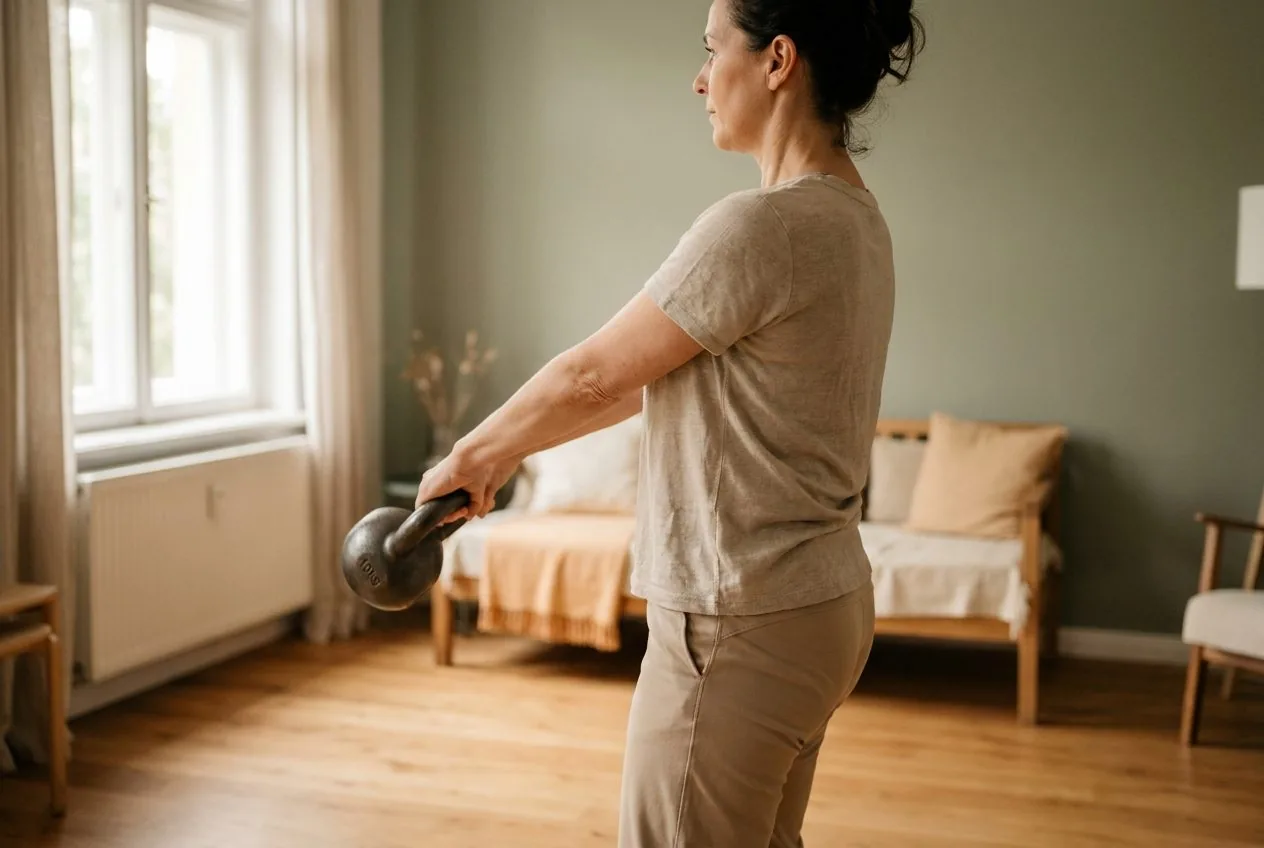
Kettlebells can look intimidating, all swinging iron and grunting gym videos, which is a shame, because underneath the noise they are one of the friendliest tools for building gentle, full-body strength after 40. A single bell trains your hips, legs, back, shoulders, and core in one tidy package, it stores in a corner, and the movements it teaches, especially the hip hinge, are exactly the ones that keep everyday life feeling easy. You do not need to swing heavy or fast to benefit.
The method, in one line: learn the hip hinge first, then work through a short sequence of gentle full-body moves with a light bell, two or three times a week, adding weight only when your form is solid. Do that and a kettlebell becomes a calm, efficient strength habit rather than a scary one.
This article is for information only and is not medical advice. Talk to your healthcare provider before starting a new exercise routine, especially if you have joint injuries, heart conditions, or dizziness.
First, choose your bell
The most common beginner mistake is buying one bell that is too heavy for the small moves and too light for the big ones. Because different muscles do the work, it often helps to have two.
- For the big hip moves (deadlift, swing): a heavier bell, because your hips and glutes are strong and a bell that is too light gives them nothing to do.
- For the smaller moves (press, row, halo): a noticeably lighter bell is usually the better start.
If you are completely new to strength, begin lighter than you expect and earn the next size. There is no prize for starting heavy, and clean form with a light bell beats sloppy form with a heavy one every time.
The hinge: the one thing to learn first
Almost every kettlebell move is built on the hip hinge, so it is worth five minutes of practice before anything else. Stand with your feet about hip-width apart, push your hips backward as if closing a car door with them, let your knees bend slightly, and keep your back flat rather than rounded. You should feel a gentle stretch in the back of your thighs. Stand tall again by squeezing your glutes.
That is the hinge. It is not a squat, where the knees lead; it is a hip movement with a long, flat back. Get this comfortable with a light bell and the rest of the sequence falls into place. Rush past it and you invite the sore lower back that gives kettlebells their unfair reputation.
The gentle full-body sequence
Here is a simple, joint-friendly sequence you can build into a 15 to 20 minute session. Move slowly, breathe, and stop any movement that causes sharp pain. Aim for around 8 to 12 repetitions of each (National Institute on Aging), or a short distance for the carry, and rest as needed.
- Kettlebell deadlift. Stand with the bell between your feet, hinge with a flat back, grip the handle, and stand tall by squeezing your glutes. This grooves the hinge that everything else uses.
- Two-hand swing to chest height. From the hinge, hike the bell back between your legs and snap your hips forward to float it to chest height. The power comes from your glutes, not your arms or your lower back. Keep it gentle; there is no need to swing overhead.
- Goblet squat. Hold the bell close to your chest with both hands, sit down between your hips with your chest up and heels down, then stand through your whole foot.
- One-arm bent-over row. Hinge forward with a flat back, let the bell hang, and row it to your ribs, squeezing your shoulder blade. Switch sides. Slow and controlled wins here.
- Kettlebell halo. Hold the bell by the horns and circle it slowly around your head, close and controlled, to loosen and strengthen the shoulders. Reverse direction each rep.
- Light floor or standing press. Press a light bell overhead one arm at a time, ribs down and core braced, and lower slowly. Use a lighter weight than your swing.
- Suitcase carry. Hold the bell at your side like a suitcase and walk a short distance, standing tall without leaning. Switch sides. This quietly builds grip and a stable trunk.
- Glute bridge with the bell. Lie on your back, rest the bell gently on your hips, and drive up by squeezing your glutes. Lower with control to finish steady and strong.
Do the sequence once through as a gentle start. As you get comfortable, add a second round. Two or three sessions a week, with a rest day between, is plenty (National Institute on Aging).
A resistance band warm-up
Cold joints do not love kettlebells, so give yourself a couple of minutes to warm up first, with less load than your working sets (National Institute on Aging). A light resistance band is perfect for this: a few band pull-aparts for the upper back, some gentle band-assisted squats, and a couple of hip openers wake everything up without any load. Bands are also a lovely gentler alternative on days your joints want less, because their resistance is lightest at the start of each movement. Our guide to the best resistance bands for women over 40 covers which type to choose.
Common mistakes to sidestep
Skipping the hinge. The swing is not an arm move or a squat; it is a hip hinge with speed. Learn the hinge slowly with the deadlift first, and the swing becomes safe and simple.
Going too heavy, too soon. Enthusiasm says grab the big bell. Your lower back disagrees. Start light, especially on presses and rows, and add weight only when your form stays clean for every rep.
Rushing the reps. Kettlebells reward control, not speed. Snapping through a movement wastes the effort and risks a tweak. Slow and deliberate, especially on the lowering phase, is where the strength is built.
Training only the swing. The swing is fun, but a balanced session needs squats, rows, presses, and carries too, which is exactly what the sequence above gives you.
Grab the printable sequence
If you would like this sequence as a simple one-page checklist to keep by your mat, join our newsletter and we will send you our gentle-strength starter guide, plus honest reviews and protein-first recipes, with no shame and no miracle promises. It is the easiest way to remember the order and the form cues while the moves are still new.
When a structured program helps
A kettlebell solves the equipment problem. It does not solve the “what do I do, and when do I progress” problem. If you know you do better with a plan that tells you exactly what to do each session, a structured program can turn a single bell into steady, sustainable results. Our honest look at Old School New Body reviews one option built around brief, joint-friendly resistance sessions that suit a midlife body and adapt easily to kettlebells or light weights. As always, keep your expectations grounded and check with your provider before starting anything new.
The honest bottom line
A kettlebell will not transform your body on its own, and no honest guide should pretend otherwise. What consistent, gentle strength work genuinely tends to support is steadier energy, better posture, easier daily movement, and muscle that quietly protects your metabolism as the years add up (NSCA; Current Sports Medicine Reports). Our metabolism after 40 explainer covers why that muscle matters so much in midlife.
Start with the hinge, choose a bell that respects where you are today, and work the gentle sequence two or three times a week. Add weight only when your form has earned it, pair the sessions with enough protein and a little walking, and let the habit do the real work. You will find more routines to build on in our gentle strength section.
Frequently Asked Questions
- What size kettlebell should a woman over 40 start with?
- It depends on the move and your starting point, so it often helps to have two. Two-hand swings and deadlifts use the big muscles of the hips, so they usually suit a heavier bell than presses, rows, and halos, which work smaller muscles and call for a noticeably lighter one. If you are brand new to strength, start lighter than you think and earn the next size.
- Are kettlebells safe for women over 40 and for sensitive joints?
- They can be, with light weight and good form, and the hip-hinge pattern many moves use is a genuinely useful skill for daily life. The key is learning the hinge before you add speed or load, keeping movements controlled, and starting light. If you have back, hip, or knee concerns, begin with the deadlift and goblet squat rather than swings, go slowly, and check with your provider before starting. Bands can be an even gentler entry point if joints are a worry.
- How often should I do a kettlebell routine after 40?
- Two or three short sessions a week is plenty for most people, with at least a day of rest between them so your muscles can recover and adapt. A gentle 15 to 20 minute session, done consistently, does far more than an occasional long, exhausting one. Consistency and recovery are where the results live, not in punishing yourself in a single workout.
- Can one kettlebell really work my whole body?
- Yes, and that is much of its appeal. A single bell lets you train your hips, legs, back, shoulders, and core through swings, squats, rows, presses, and carries, which is why it is such an efficient tool for a busy life. As you get stronger you may want a second, heavier bell for the big hip movements, but one well-chosen kettlebell is a complete starting gym on its own.
- I have never lifted before. Where do I actually start?
- Start with the hip hinge, using the deadlift, before anything else, because it is the foundation the swing and most other moves are built on. Practice it with a light bell until standing tall by squeezing your glutes feels natural, then add the goblet squat and a light row. Only add the swing once the hinge feels solid. There is no rush, and building the pattern well now protects you for every session after.
Sources & references
Before you go
The 7-Day Protein-First Meal Plan for Women Over 40
A complete protein-first week, finished for you: your personal protein target, a one-page shopping list, 21 recipes at 25-35 g protein each, and a timed 90-minute prep schedule. Printable PDF, paired with a free 7-lesson email course.
Free guide
The 7-Day Protein-First Meal Plan for Women Over 40
A complete protein-first week, finished for you: your personal protein target, a one-page shopping list, 21 recipes at 25-35 g protein each, and a timed 90-minute prep schedule. Printable PDF, paired with a free 7-lesson email course.